South Asia contains many religions and cultures, including Hindu, Buddhist, Jain, Sikh, Muslim, Christian, Indigenous, and other traditions. It is not one culture or a shared pantheon. This overview focuses on Buddhism, Jainism, and Sikhism, the traditions named in the site's original category, while distinguishing their teachings and institutions.
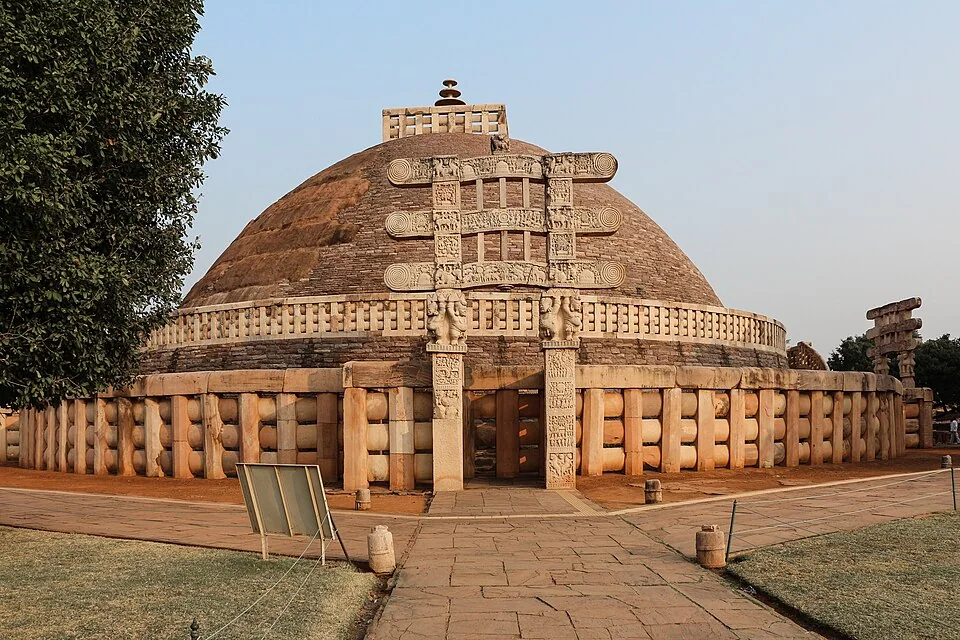

Buddhism: Awakening and the End of Suffering
Siddhartha Gautama, the Buddha, is an awakened teacher rather than a creator god. Buddhist teachings examine suffering, its causes, its cessation, and a path of ethical discipline, meditation, and understanding. Karma concerns intentional action and its consequences, not an unavoidable fate assigned by a deity. Harvard Pluralism Project, Four Noble Truths.
Accounts of the Buddha's life describe renunciation, awakening, teaching, and final nirvana. Jataka narratives recount earlier births, using human and animal protagonists to examine generosity, wisdom, and other qualities. Their use varies by tradition and setting.
Buddhist cosmologies include devas, nagas, and many other beings, but residence in a heavenly realm does not necessarily mean liberation. In Mahayana traditions, bodhisattvas such as Avalokiteshvara and Manjushri embody and actively express compassion and wisdom. Vajrayana practices use additional forms and methods requiring specific instruction. These distinctions matter when comparing Newar, Tibetan, Sinhala, and other Buddhist settings. Harvard Pluralism Project, Buddhism.
Jainism: Liberated Teachers and Nonviolence
Jain traditions describe an uncreated universe and the possibility of freeing the soul from karmic bondage. Tirthankaras are teachers who establish a crossing toward liberation, not creator gods who dispense salvation independently of a person's conduct. Mahavira is the twenty-fourth tirthankara of the present cycle; Parshvanatha and Rishabhanatha are also especially prominent in worship and narrative.
Ahimsa, non-injury, follows from the recognition that many forms of life possess souls. It shapes food, work, speech, and attention to the consequences of action. Renunciants undertake stricter disciplines than lay followers, so the practices of an ascetic should not be attributed to every Jain household. Harvard Pluralism Project, reverence for life.
Narratives of earlier lives, renunciation, and victory over attachment illustrate the transformation of a person rather than a deity's conquest of the universe. Protective yakshas and yakshis appear in many Jain settings, but their worldly assistance is distinct from the perfected state of a liberated teacher. See Jain beliefs and Harvard's introduction to Jainism.
Sikhism: One Divine Reality and the Gurus
Sikh tradition began with Guru Nanak and developed through the ten human Gurus. It affirms one divine reality, expressed by Ik Oankar, and emphasizes remembrance of the divine, honest work, sharing, and service. The Gurus are not a family of creator gods.
The Guru Granth Sahib holds the position of enduring Guru. Its hymns are sung and interpreted in congregational life. Stories about the Gurus, including the janamsakhi traditions concerning Guru Nanak, communicate teachings through encounters, journeys, and challenges to pride or exclusion.
A gurdwara welcomes the congregation around the Guru Granth Sahib. Kirtan, prayer, and service structure worship, while langar, the communal meal, expresses equality and shared responsibility through preparation, distribution, and eating together. Harvard Pluralism Project, the gurdwara; langar.
The Khalsa, inaugurated by Guru Gobind Singh, establishes particular commitments for initiated Sikhs. Its discipline and visible articles of faith belong to a specific religious history, not a generic South Asian warrior mythology.
Comparison Without Conflation
Buddhist, Jain, Hindu, and Sikh vocabularies can include terms related to karma, liberation, and rebirth, but the terms occupy different philosophical systems. Buddhist teachings about not-self differ fundamentally from Jain accounts of enduring souls. Sikh devotion to the one divine reality differs from both a non-creator Jain cosmos and a classification of Buddhism through its devas.
Similarly, bowing before an image or text does not have one universal meaning. It may express respect, recollection, the recognition of perfected qualities, or a relationship with an active sacred presence. Understanding the practice requires the community's own explanation.
Regional and Lived Diversity
A religious label does not predict every person's beliefs. Survey research in India finds substantial variation within communities as well as overlap between them. Language, family, caste, region, migration, and individual experience shape participation. Pew Research Center, religious diversity in India.
The existing Hindu, Nepali, Tamil, and Sindhi articles provide more specific settings in which these relationships can be examined.