Sindhi culture developed around the lower Indus and extends through communities in Pakistan, India, and a global diaspora. Most Sindhis in Pakistan are Muslim, while Sindhi Hindu communities maintain distinctive devotional traditions. Shared language, poetry, and pilgrimage do not erase differences between these religious commitments.

Jhulelal and the Indus
Jhulelal, also called Uderolal and by other devotional names, is a central sacred figure for Sindhi Hindus. Water, the Indus, protection, and the survival of the community are prominent in his worship. He is often identified with Varuna within a Hindu theological framework.
A devotional narrative describes a ruler threatening forced conversion and a divine response to the community's prayers. Jhulelal appears in changing forms, confronts the ruler, and insists on the legitimacy of worship across religious difference. The account is a sacred story transmitted in varying versions, not a independently verified chronicle of every event it describes. Community devotional account of Jhulelal.
Cheti Chand, the Sindhi Hindu new-year observance, is associated with Jhulelal's birth and community renewal. Offerings and processions connect remembrance with water and collective identity. In diaspora settings, devotion also preserves relationships with a homeland from which many families were displaced.
Shared Shrines and Different Interpretations
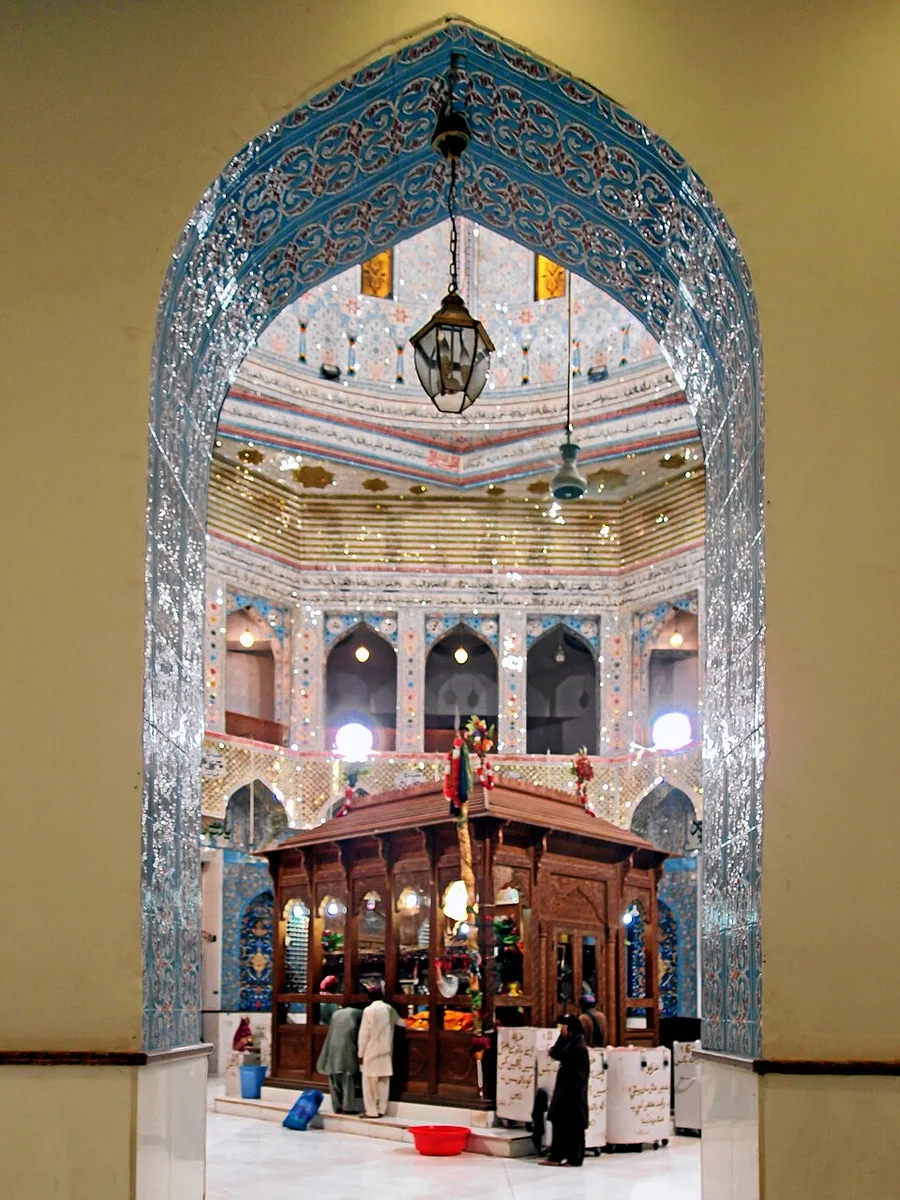
The shrine at Odero Lal has been approached through both Hindu and Muslim traditions. Hindu devotees identify the sacred figure with Jhulelal, while Muslim accounts connect the site with Sheikh Tahir. The existence of shared space does not mean that worshippers necessarily hold identical beliefs about the figure.
The name Jhulelal can also occur in devotion associated with Lal Shahbaz Qalandar. Shared language and performance create relationships between traditions, but the historical Sufi saint and the Hindu sacred figure should not simply be collapsed into one biography.
Lal Shahbaz Qalandar
Lal Shahbaz Qalandar is a revered Sufi figure associated with Sehwan. Pilgrimage, prayer, music, and dhamal, an energetic devotional movement or dance, express relationships with the saint and the blessing associated with his shrine.
A saint in Islamic devotion is not ordinarily understood as an independent creator god. Requests for help and participation at a shrine occur within debates about mediation, proper worship, and religious authority. Practices welcomed by some Muslim devotees are criticized by others.
Shah Abdul Latif Bhittai
The poet and Sufi Shah Abdul Latif Bhittai gave enduring literary form to Sindhi stories and spiritual longing. His shrine at Bhit Shah is a major place of remembrance and musical devotion. The Endowment Fund Trust for Preservation of the Heritage of Sindh documents the shrine and its architectural setting. Shrine of Bhit Shah.
His poetry uses human journeys, separation, endurance, and love to explore the search for the divine. The women of the Shah Jo Risalo are active moral and spiritual figures rather than passive decorations in tales of male heroes.
The Heroines of the Risalo
Marui's attachment to her own people makes fidelity to home more compelling than luxury. Sassui's difficult search for Punhun turns a physical journey into an exploration of longing and perseverance. Sohni's crossing toward her beloved links love with danger and the failure of material support.
Momal, Noori, Lila, and Sorath appear in other narrative cycles. Their situations differ, and each permits reflection on pride, trust, status, or devotion. A University of Sindh study examines the emotional and ethical force of these women in Shah Latif's poetry. Kalich Research Journal.
The Bhit Shah Cultural Centre has represented the heroines through visual displays, showing how poetic interpretation also enters public heritage education. Endowment Fund Trust, cultural centre.
Urs, Music, and Religious Memory
An urs commemorates a Sufi saint's death as a union with the divine beloved. Shrine gatherings can include recitation, music, food distribution, and pilgrimage. The relationship between devotion and public performance depends on the shrine and its participants.
Partition, migration, and political change altered who could reach particular sacred places. Sindhi communities have carried poetry, songs, household observances, and devotion to new settings. These practices preserve memory while developing forms appropriate to different social and religious environments.