Turkic peoples speak related languages across a vast area of Eurasia. Their religious histories include Islam, Buddhism, Christianity, Manichaeism, and diverse local traditions. This overview distinguishes early inscriptions, later oral narratives, and regional practices rather than assembling them into one timeless religion.

Tengri and Political Order
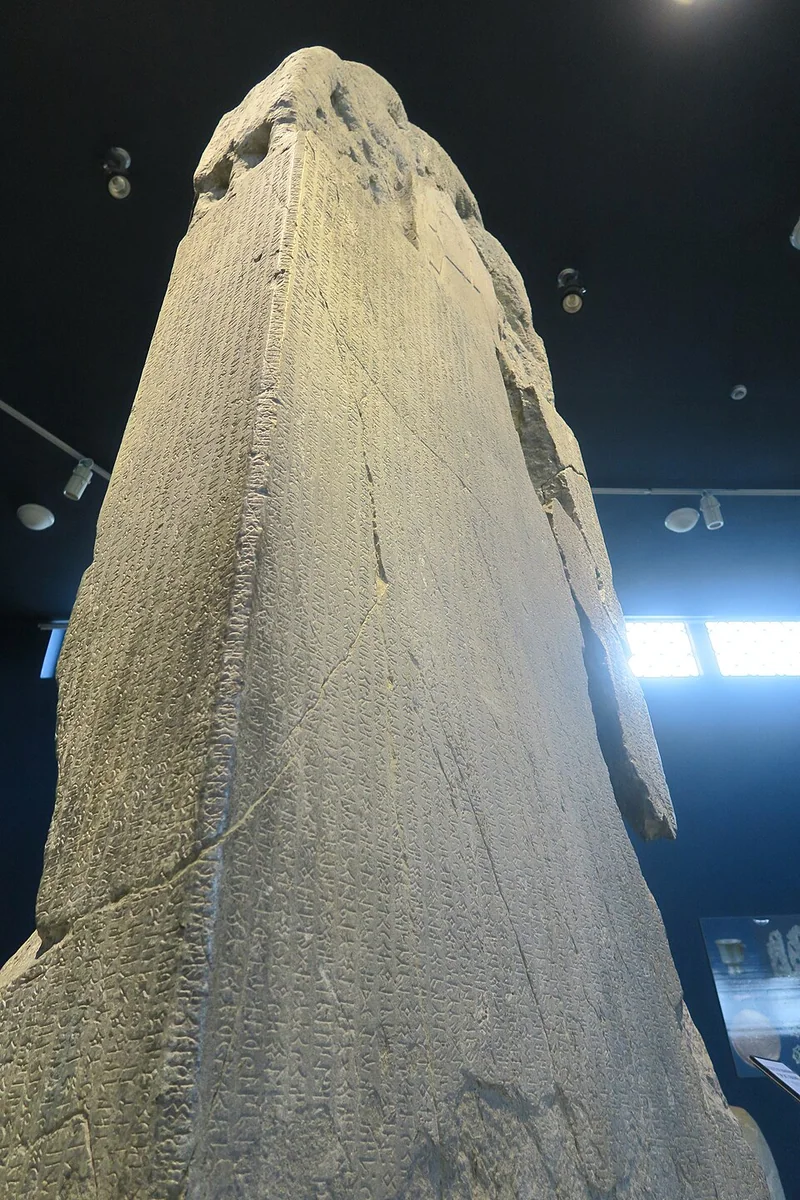
In Old Turkic inscriptions, tengri can refer to heaven or to divine Heaven. Its meaning depends on context. Royal inscriptions connect political fortune and legitimate rule with a cosmic order, but they are public statements of authority rather than exhaustive descriptions of ordinary religious life. Study of tengri in Old Turkic inscriptions.
Tengri is not simply a thunder god with a uniformly preserved family biography. The term's later use among different peoples reflects translation, religious change, and local interpretation. Comparisons between early inscriptions and modern invocations can be illuminating when their historical distance remains explicit.
Umay and Sacred Earth and Water
Umay appears in early Turkic evidence and in later traditions concerning protection, maternity, and children. Royal language can invoke her in relation to a ruler's mother, joining familial care with political symbolism.
The interpretation of individual inscriptions remains a scholarly question. A study of the disputed expression Umay Beg in the Altın Kol I inscription illustrates how readings depend on language, context, and comparisons with later Siberian traditions. Çukurova University Turkology research.
Sacred earth and water, often discussed through the expression yer-sub, concern the inhabited territory and its powers. Mountains, rivers, and ancestral lands can support collective identity and impose obligations. These references do not necessarily identify a single goddess named “Earth-Water.”
Ülgen and Erlik in Altai Narratives
Later Altai traditions describe Ülgen as a powerful upper-world figure and Erlik as a dangerous being associated with the underworld, death, or harmful forces. Their roles vary among collected accounts.
Some creation narratives involve the retrieval of earth from primordial water. Conflict arises when a participant attempts to retain material or act independently, explaining features of the imperfect world. Such stories are not directly recorded in the early imperial inscriptions and should not be presented as their missing canonical scripture.
Erlik can be an adversary whose actions introduce suffering, but his ritual significance is more specific than a simple substitution for the Christian devil. Scholarship compares his destructive role with Ülgen's constructive activity while examining the particular narratives in which each appears. Study of Erlik in Altai creation mythology.
Wolves, Ancestors, and Heroes
Wolf ancestry narratives are associated with early Turkic ruling traditions. They can explain survival after catastrophe, the restoration of a lineage, and a dynasty's exceptional origin. A genealogical myth is not evidence that every Turkic-speaking community worshipped wolves in the same way.
Heroic epics such as those surrounding Oghuz, Manas, and the figures of the Book of Dede Korkut belong to distinct textual and oral histories. They portray ideal and flawed rulers, loyal companions, formidable enemies, and extraordinary journeys. Many versions incorporate Islamic values alongside older narrative patterns.
Supernatural adversaries, miraculous births, speaking or exceptional horses, and encounters with unseen beings give heroes capacities beyond ordinary warfare. The significance of these motifs depends on the particular epic, not merely on their appearance elsewhere in Eurasia.
Ritual Specialists and Music
Specialists often translated as shamans mediate relations with spirits in some Turkic traditions. The relevant titles and duties vary. A healer in one community may not occupy the same role as a diviner or ceremonial leader elsewhere.
Musical instruments and vocal performance can be understood as active means of spiritual communication. Smithsonian accounts of Central Eurasian practice discuss these connections while also demonstrating the regional range of the evidence. Smithsonian Folklife Festival, nomads and shamanism.
Conversion and Continuing Traditions
Religious change altered divine names, stories, ritual authority, and ideas about legitimate worship. It did not proceed uniformly. The traditions of the Sakha and Uyghurs, for example, developed within very different religious and political settings.
Modern interest in Tengri and ancestral traditions includes community practice, scholarship, artistic adaptation, and religious reconstruction. These activities should be distinguished from the evidence for any one ancient ceremony.