Uyghur religious history encompasses more than one period and population. Medieval Uyghur kingdoms supported Buddhist and Manichaean traditions, while most contemporary Uyghurs identify with Islam. The formation of modern Uyghur communities involved the histories of numerous Central Asian oasis societies; it should not be represented as a single unchanged line from one ancient kingdom.
.jpg)
Earlier Religious Worlds
Old Uyghur manuscripts preserve translations and compositions connected with Buddhism and other religions. They document scholarly and devotional exchange across the routes linking China, Central Asia, India, and Iran.
Buddhist texts concern buddhas, bodhisattvas, merit, and rebirth. Manichaean traditions describe a cosmic struggle involving light and darkness within a distinct religious system. These bodies of teaching should not be combined into an ancestral “Uyghur pantheon.” The International Dunhuang Programme documents this multilingual and multireligious manuscript environment. International Dunhuang Programme, manuscripts; British Library, Old Uyghur fragments.
Islam and Divine Unity
Islamic belief centres on one God, revelation, prophecy, moral responsibility, and judgement. Muhammad is a prophet, not a deity. Angels, jinn, saints, and ancestors occupy different categories and should not be listed together as gods.
Prayer, fasting, charity, study, and family observance connect Uyghur Muslims with wider Islamic life. Interpretations and degrees of observance differ. Shrine practice, Sufi traditions, reformist criticism, and everyday household customs have also generated debate within communities.
Saints and Sacred Biography
Saintly narratives connect particular people and places with the spread and protection of Islam. Stories about Satuq Bughra Khan, for example, give the conversion of a ruler a central place in accounts of regional religious history. Such narratives may combine historical memories with miracles and later devotional interpretation.
A saint's significance can include learning, courage, sacrifice, healing, or exceptional closeness to God. Their power is usually understood within an Islamic framework of blessing and intercession rather than as independent divine sovereignty.
Written biographies and oral retellings help connect individual shrines into a wider sacred geography. The routes between places can be as important as any one monument.
Mazar Pilgrimage
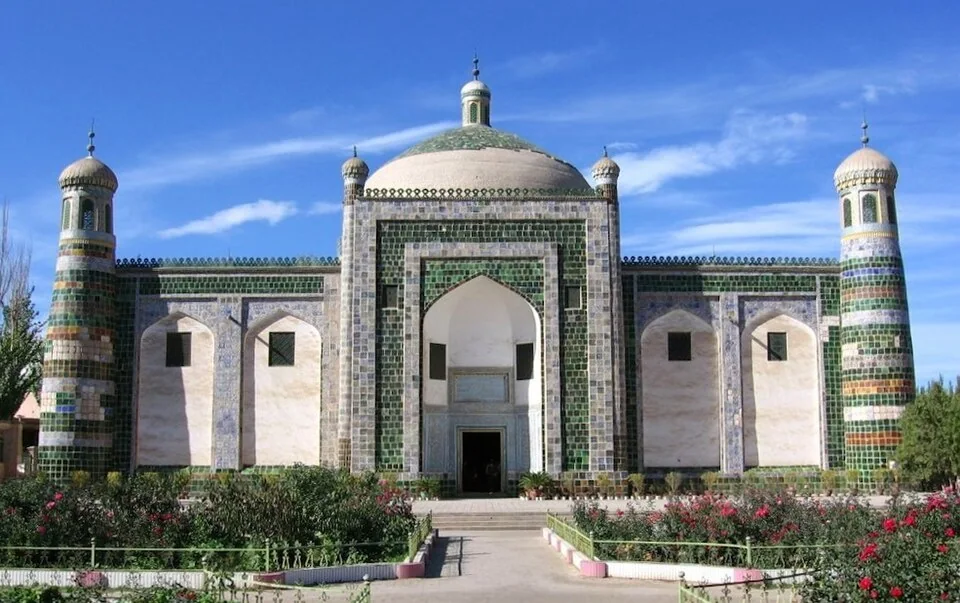
Mazar refers to a shrine, often associated with the grave of a saint or other revered figure. Ethnographic research documents pilgrimage routes across oasis and desert landscapes, bringing families and communities to sites remembered through stories, offerings, and prayer.
Pilgrimage can address illness, fertility, personal obligations, and collective memory. Not every participant understands every practice identically. A shrine's identity depends on its own history and the people maintaining relations with it. Rahile Dawut, Shrine Pilgrimage among the Uighurs.
Festivals at some shrines have included music, recitation, food, and gatherings beyond formal prayer. Research by Rachel Harris and Rahile Dawut examines the religious and social dimensions of these events and their relationship with state regulation. Harris and Dawut, Mazar Festivals of the Uyghurs.
Oral Tales and Unseen Beings
Uyghur storytelling includes heroic adventures, romances, humorous tales, and encounters with supernatural beings. Jinn and beings described through Persian-derived terms such as pari participate in a wider Central Asian narrative world, but their personalities vary by tale.
A supernatural character in an entertaining story is not automatically an object of worship. Narratives can examine cleverness, loyalty, injustice, and the hazards of desire without functioning as religious doctrine.
Music and Community Life
Muqam traditions combine extensive musical and poetic repertoires. Their texts and settings may express love, ethical reflection, and religious ideas, while performances also serve other social purposes. UNESCO's description emphasizes the diversity of Uyghur muqam practices. UNESCO, Uyghur Muqam of Xinjiang.
Meshrep gatherings can include music, games, oral literature, food, and the negotiation of community expectations. They should not all be classified as religious ceremonies simply because they contribute to moral and cultural life. UNESCO, Meshrep.
Reading Historical Accounts
Descriptions of shrine festivals and household practices often document a specific place and period. Political restrictions, migration, changing institutions, and differing religious interpretations affect what can be practised and transmitted. An account of a festival observed in an earlier decade cannot establish that the same gathering continues under identical conditions today.