Polynesia includes many societies whose related languages preserve evidence of shared ancestry and extensive voyaging. Māori, Samoan, Tongan, Tahitian, Hawaiian, Rapa Nui, and other traditions nevertheless have distinct histories. A related divine name does not guarantee an identical personality, genealogy, or ritual role.

Genealogy and Creation
Many Polynesian accounts explain the world through relationships of birth and descent. Land, sky, humans, and other living beings can belong within an extended genealogy. Such relationships connect human responsibilities with the origins of the inhabited world.
In well-known Māori accounts, Ranginui and Papatūānuku are sky and earth, whose separation allows their children and later beings to inhabit a world of light. Related accounts elsewhere use different names and sequences. Te Ara compares these traditions without treating them as a single text. Te Ara, Polynesian creation traditions.
Tangaroa, Tagaloa, and Ta'aroa
Among Māori, Tangaroa is strongly associated with the sea and its inhabitants. Relationships between the sea and other domains emerge through conflicts and kinship among the children of sky and earth. Fishing consequently has religious dimensions involving respect and appropriate conduct. Te Ara, Tangaroa and the sea.
In a Samoan account recorded by Lyell and Ellen Holmes and published by the National Park Service, Tagaloa shapes islands and establishes their inhabitants. His work explains relationships among places, people, and authority. This creative role is broader than a narrow designation as “sea god.” Samoan creation legend.
A Tahitian tradition describes Ta'aroa emerging from confinement within a shell and making the world from his own resources. The shell and body provide the materials and structure of existence. These related names preserve linguistic connections, while the narratives show significant differences in theology and local history. Tahiti Heritage, Ta'aroa's creation.
Maui and Transformative Action
Maui, written Māui in Māori, is known across much of Polynesia as an audacious figure whose actions alter human conditions. Episodes include fishing up land, slowing the sun, obtaining fire, and confronting death. The selection and details of these episodes vary between island groups.
His intelligence is not identical with moral perfection. Tricks can benefit humanity while provoking relatives or divine powers. Narratives may explain both an achievement and a permanent limit: successful control of the sun does not imply successful control of mortality. The Māori article treats one regional setting rather than assigning every Maui episode to all Polynesian peoples.
Hawaiian Deities and Living Landscapes
Hawaiian traditions include Kāne, Kū, Lono, and Kanaloa, whose worship involves different aspects of life, authority, production, and the environment. Individual forms and local traditions matter; reducing each name to a single function obscures that diversity.
Pelehonuamea, commonly Pele, is associated with volcanic activity and the making of land. For many Hawaiians she is family, not a fictional explanation discarded once geological processes are understood. Her relationships with her sisters and other beings make the volcanic landscape part of a living genealogy. National Park Service, Pele.
The saga of Hiʻiaka describes Pele's sister undertaking a difficult journey to bring Lohiʻau to her. Promises, delays, jealousy, destruction, and efforts to restore life drive the story. It explores the obligations of kinship through powerful personalities rather than presenting a simple conflict between a good and an evil goddess. National Park Service, Pele and Hiʻiaka.
Sacred Power and Restrictions
Words related to mana describe efficacy, authority, and sacred power, but their meaning depends on language and circumstance. Tapu, and Hawaiian kapu, concerns restrictions and distinctions that shape relations among people, places, and things. Neither term is adequately translated by the vague modern idea of “spiritual energy.”
Ritual specialists, genealogical standing, successful action, and relationships with ancestors can all be relevant to authority. Religious structures also differed: a Hawaiian temple system and a Māori local meeting or sacred place should not be made identical by translating both into the generic word “temple.”
Images, Offerings, and Historical Change
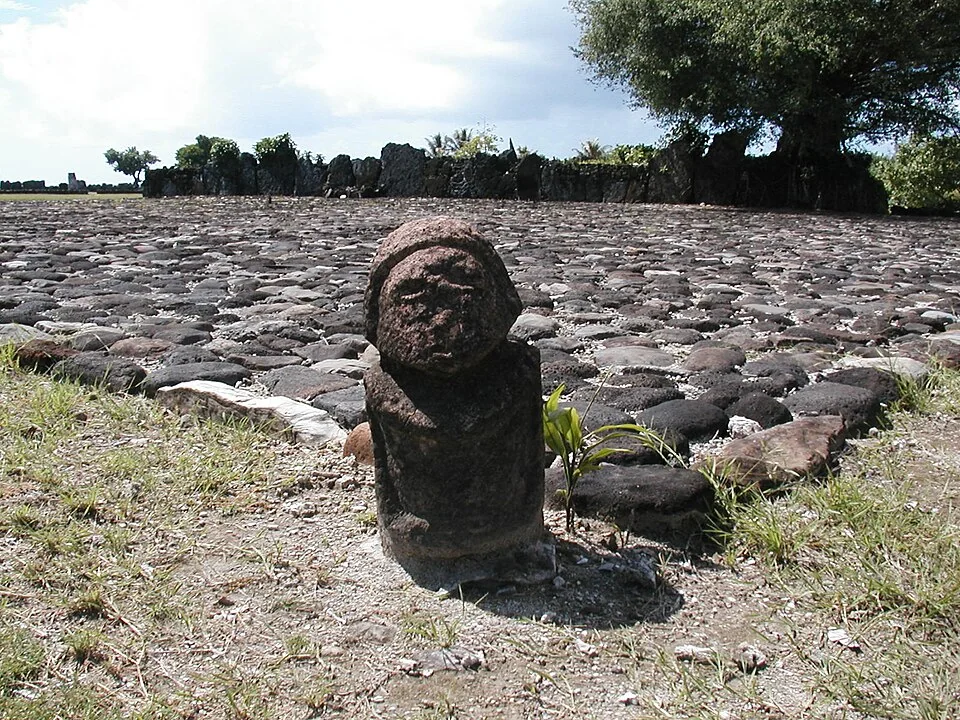
Images of Tangaroa took different forms across the islands, using wood, stone, fibre, shell, and other materials. The diversity of forms reflects local practices rather than variations on one standardized statue. Museum of New Zealand Te Papa Tongarewa.
Missionization and colonial rule transformed public worship, sometimes destroying sacred sites and belongings. Stories, genealogies, performance, and the names of places continued in changed settings. Christianity and Indigenous traditions now have different relationships in different communities. More specific accounts are available for Samoan, Rapa Nui, and Māori traditions.