Uralic is a language-family designation covering peoples from northern Europe to western Siberia. It includes Finnic, Sámi, Ugric, Permic, Mari, Mordvinic, and Samoyedic languages. Linguistic relationship does not establish a single shared religion or justify reconstructing a complete ancestral pantheon from later names.
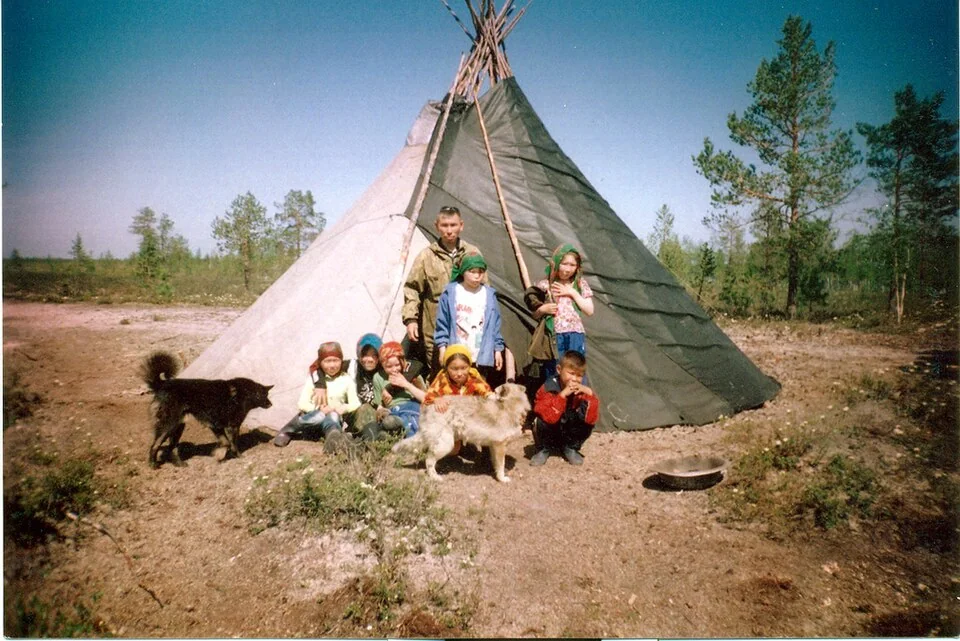

Communities within this family have practised Christianity, Islam, and various indigenous religions, often in locally distinctive combinations. The Estonian National Museum's comparative presentation emphasizes both related histories and differences in livelihood and religious experience. Estonian National Museum, Echo of the Urals.
Sky Powers and Local Theologies
Khanty and Mansi traditions include a sky-associated figure whose name is commonly transcribed as Num-Torum or Numi-Torum. The words translated as “sky,” “weather,” and “god” can overlap in ways that complicate an English label such as “sky god.”
Narratives relate him to other powers and to the ordering of the world. These relationships differ across collections and local communities. A comparative account should retain those differences instead of selecting one genealogy as authoritative for all Ob-Ugric peoples. Estonian Literary Museum, Ob-Ugric mythology.
In Udmurt traditions, Inmar is a major divine figure, while Kildysin is associated with creation and agricultural wellbeing. Accounts describe Kildysin's closeness to human fields and labour, contrasting with the increasing remoteness attributed to a heavenly deity in some interpretations. Study of Inmar and Kildysin.
Creation and the Earth Diver
An important comparative motif concerns the recovery of earth from an original expanse of water. A bird or another being dives for material from which the land is formed. In some versions, rivalry or concealment explains uneven terrain or other difficulties in human existence.
The motif occurs beyond Uralic-speaking societies. Its distribution cannot, by itself, prove direct descent from one ancient religious system. Recorded versions can also incorporate Christian or other ideas about a creator and an adversary. Folklore, studies of creation narratives.
Finnic poetry includes different cosmological images, notably the world formed from an egg. The literary Kalevala draws on collected oral poetry but arranges it into a nineteenth-century epic. Its sequence is not a transcript of a single ancient creed.
Bears and Relations with Animals
Ob-Ugric bear ceremonies involve songs and performances addressing the animal's exceptional status. In recorded Khanty songs, the bear speaks of its origin and relations with divine powers. Its death requires a ceremonial response that situates human hunting within a larger moral and cosmological order. Khanty bear feast songs.
The bear may be addressed through indirect names, and performance can combine reverence with humour and social commentary. Such ceremonies should not be reduced to a generic “bear worship” shared unchanged by all northern peoples.
Hunting and fishing traditions also involve powers associated with forests, waters, and animal populations. Proper treatment of places and remains can express reciprocity, restraint, and recognition of nonhuman agency.
Sacred Groves and Communal Prayer
Mari religious traditions retain prominent communal ceremonies in sacred groves. Prayers and offerings concern divine powers, agricultural success, family welfare, and the community's relationship with its surroundings.
Kugu Jumo is a major divine name in Mari tradition. The organization of ceremonies and the interpretation of other beings vary. A grove is a specific ritual place with its own community and obligations, not simply any attractive patch of woodland.
Udmurt and other regional traditions also include sacred sites, lineage relationships, and household practices. Similar forms should be compared without erasing distinct languages and institutions.
Objects, Ancestors, and Sacred Places
Among Khanty and Mansi communities, relationships with protective beings can be attached to families, settlements, and particular territories. Material objects may support these relationships without being understood merely as illustrations of an invisible god.
The Torum Maa museum was founded with Khanty and Mansi participation and includes an active sanctuary among its cultural settings. Its work demonstrates that these traditions belong to living communities as well as ethnographic collections. Torum Maa Museum, institutional history.
Distinct Regional Traditions
Sámi traditions require their own account of sacred places, drums, and religious change. Finnish traditions preserve different bodies of poetry and folklore. Hungarian medieval and later traditions likewise cannot be reconstructed simply by importing Khanty or Mansi beliefs because their languages are related.
Comparative study is most useful when a shared motif leads to closer attention to the named community, the collector, and the setting in which a story was told.