The Caribbean before European colonization contained many communities connected by travel, trade, migration, and marriage. “Pre-Columbian Caribbean” is a regional and chronological category, not the name of a religion. Taíno, Kalinago, and Arawakan-speaking peoples must also be distinguished from archaeological labels such as Saladoid, which classify material traditions rather than precisely naming every community that produced them.

An Interconnected Archipelago
Archaeology documents long-distance movement of stone, shell, pottery styles, and other materials. Sacred belongings and religious ideas could circulate through the same networks, but shared objects do not prove identical beliefs.
The National Park Service's account of Caribbean exchange emphasizes changes in settlements and networks over time. This helps explain why the islands should not be divided into a few static cultural blocks based only on what Europeans recorded around 1492. Caribbean trade and networks.
Taíno Cemís and Ancestral Power
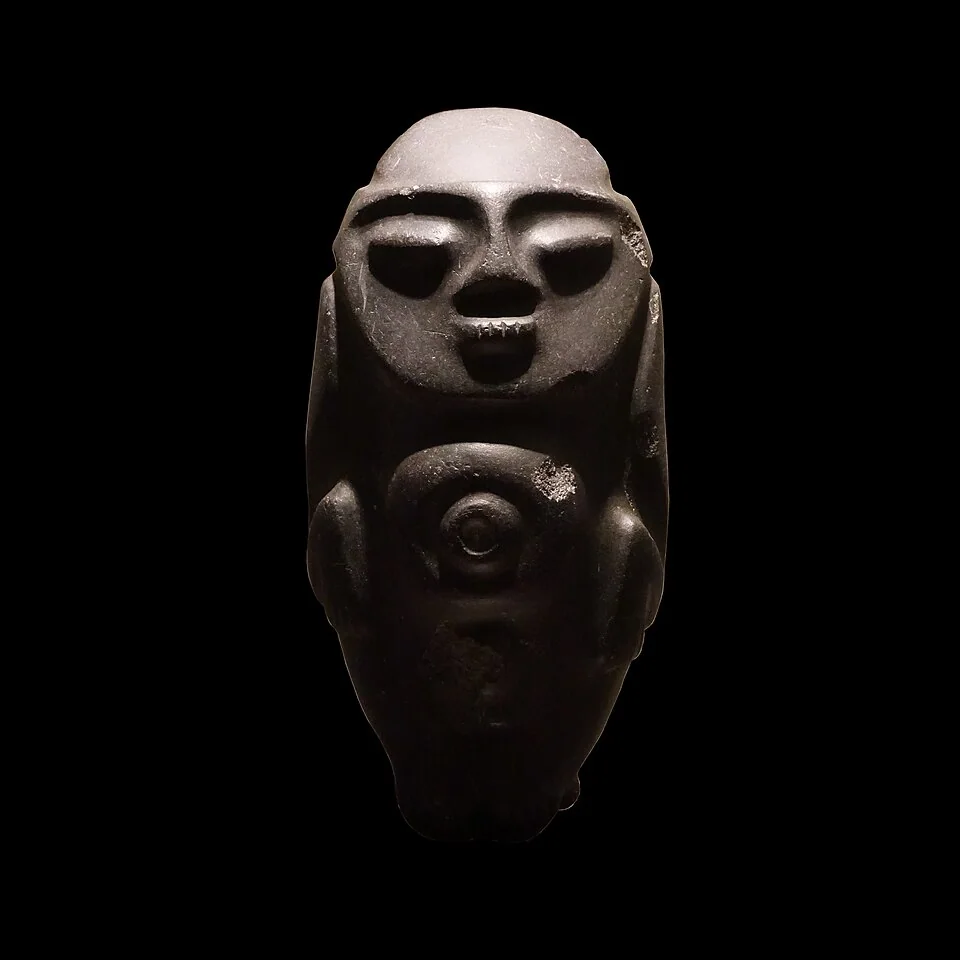
Among communities conventionally called Taíno, cemí or zemí refers to powerful beings and to belongings through which their presence was engaged. A carved figure might concern a deity, an ancestor, or another source of authority. Wood, stone, cotton, shell, and bone could all participate in this religious material world.
Yúcahu is associated in colonial records with cassava and sustaining life; Atabey, his mother, is connected with water and fertility. These descriptions provide a starting point, but translation and the recorders' expectations affect the surviving accounts. Library of Congress, Taíno religion and objects.
Consultation, Performance, and Authority
Cohoba ceremonies involved a psychoactive preparation and relationships with cemís. Specialists and leaders sought knowledge concerning health, collective decisions, and unseen conditions. Carved seats, tubes, and other objects belonged to these ceremonial settings; their significance cannot be reduced to the chemical effects of a substance.
Duhos, ceremonial seats, expressed rank and provided a setting for authoritative action. Public spaces also supported gatherings, performance, and ball games. Religious life connected political power with ancestry and communal memory rather than forming a separate institution isolated from village affairs. Dominican Republic museums, cemís and duhos.
Kalinago Traditions and Colonial Categories
Kalinago communities of the Lesser Antilles had their own languages, political relationships, and spiritual traditions. Colonial texts frequently described them through hostile categories, especially the opposition between supposedly peaceful “Arawaks” and violent “Caribs.” Such classifications should not be accepted as a neutral map of Indigenous identities.
Historical accounts mention ancestral and potentially harmful spiritual beings, but the surviving evidence is uneven and filtered through European languages. It is not sound to assign all Taíno cemí names to Kalinago worship or to build a complete Kalinago pantheon from isolated colonial references.
Recent museum work presents Taíno and Kalinago histories together while retaining their differences and including contemporary Indigenous expression. This approach also corrects the assumption that colonization left no living descendants or cultural continuities. Musée du quai Branly, First Nations of the Caribbean.
Caves, Landscapes, and the Dead
Caves figure in Taíno origin narratives and contain archaeological evidence of ritual activity. Islands, mountains, waters, and ancestral places could organize memory and authority. Human remains and representations of the dead likewise establish relationships between generations, although the meaning of a particular burial must be inferred cautiously.
Regional archaeological research distinguishes successive changes in settlement, ceramic traditions, and political organization. A later Taíno account can illuminate a landscape without proving that people used it with the same meaning many centuries earlier. Florida Museum, Taíno culture history.
Reading the Sources
Ramón Pané's account and other early writings are indispensable but partial records made under colonial conditions. Archaeology supplies evidence that those writers missed, while descendants and Indigenous researchers bring other questions to the objects and texts.
The separate Taíno article discusses named beings and stories in greater detail. The Arawak article provides another entry point, with the caution that “Arawak” may name a particular people or a much wider language relationship depending on context.