Zapotec peoples inhabit several regions of Oaxaca and communities beyond it. Their languages and local traditions are diverse. Ancient states centred on places such as Monte Albán, colonial communities, and contemporary towns provide evidence for related but changing religious worlds.
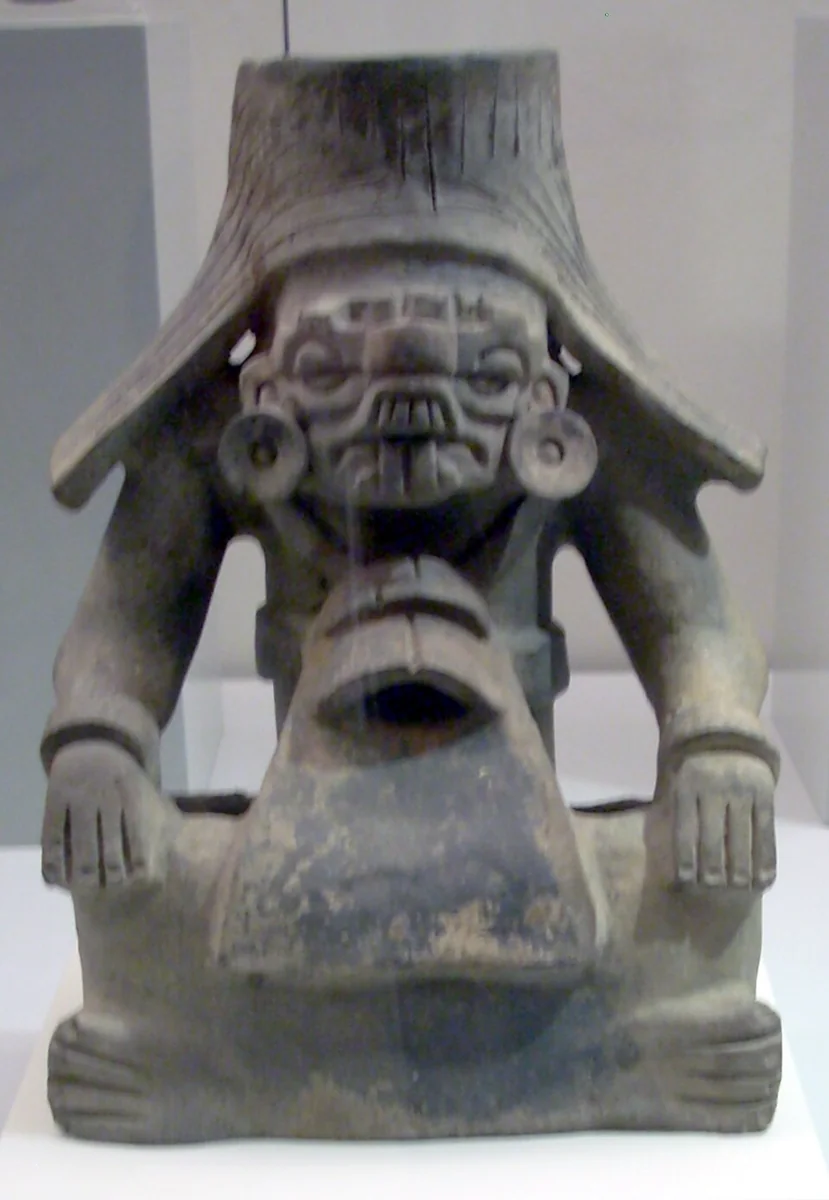

Archaeological objects, colonial descriptions, and living narratives answer different questions. An ancient effigy cannot automatically be assigned the name of a deity recorded many centuries later.
Cocijo and Lightning
Cocijo, also written Cociyo, is a major power associated with lightning, rain, and agricultural fertility. His recognizable imagery appears on objects and architectural elements. Lightning expresses force and sudden transformation, while rainfall sustains the fields.
INAH identifies Cocijo's associations not only with rain but also with storms, mist, clouds, dew, hail, and terrestrial water. This range helps explain why the deity mattered within an agricultural landscape. INAH, Pitao Cocijo.
The face and costume of an image can communicate these powers without preserving a corresponding narrative in writing. Scholars must therefore distinguish iconographic interpretation from a directly attested story about the god.
Maize and Pitao Cozobi
Pitao Cozobi is associated with maize and abundant harvests. Maize cultivation connects human labour with the seasonal forces that make food possible. Offerings and ceremonies express obligations within that relationship.
Names beginning with Pitao appear in colonial accounts and modern descriptions of Zapotec divinities. Translating such terms into a neat European-style pantheon can conceal local meanings and the circumstances in which the names were recorded. INAH's guide introduces Pitao Cozobi alongside other named powers while drawing attention to agriculture's central place. INAH, Zapotec deities.
Death and Mitla
Pitao Pezeelao, also transcribed as Bezelao and in other forms, is associated with death and the underworld. Xonaxi Quecuya appears as a female death-related figure in historical descriptions. These names should not be multiplied into separate deities merely because colonial spelling varies.
Mitla, known in Zapotec forms as Lyobáa, was an important sacred and political centre. Its name and historical associations connect it with the resting place of the dead. Monumental architecture and tombs show the material importance of these relationships. INAH, Mitla.
An owl image from a tomb at Huitzo has been interpreted as a messenger of the underworld deity. Its placement over a human face connects a deceased elite person with divine mediation rather than portraying death as simple disappearance. INAH, guardian of the underworld at Huitzo.
Ancestors and Effigy Vessels
Zapotec tombs contain vessels conventionally called urns, although this label does not mean that every example held cremated remains. Their elaborate figures can represent ancestors wearing divine attributes.
This interpretation differs from the older assumption that every figure is a straightforward portrait of a god. Ancestors could mediate relationships with divine powers, and repeated visits to tombs sustained their importance across generations. Metropolitan Museum of Art, Zapotec effigy urn.
Religious authority, lineage, and political legitimacy were consequently intertwined. The dead remained involved in the identity and claims of their descendants.
Sacred Time and Religious Specialists
Calendrical knowledge helped order ceremonies and interpret significant days. Divination and specialist learning linked human decisions with a world of patterned time and powerful relationships.
Colonial descriptions preserve information about priests and ceremonies while also reflecting the campaign to replace indigenous religion. Their condemnatory language should not be adopted as a neutral account of the practices they describe.
Place, Animals, and Contemporary Traditions
Modern Zapotec communities maintain diverse relationships with mountains, caves, water, and beings associated with particular places. Stories explain why a location requires respect or why an encounter has consequences. These narratives are local knowledge, not fragments to be rearranged into one universal Zapotec creation story.
Ideas about animal companions or transformations appear in regional traditions, with distinct terms and interpretations. They should not all be equated with the same concept of a “spirit animal.”
Catholic saints, community festivals, offerings to the dead, and indigenous understandings of land coexist in many settings. Other Zapotec people follow Protestant churches or different religious paths. The obligations of sponsorship, communal work, kinship, and remembrance continue to shape religious life in forms specific to each town and family.