Yucatec Maya traditions belong to a wider Maya cultural world but have their own languages, histories, and local forms. Evidence includes archaeology, precolonial and colonial texts, oral narratives, and contemporary practice. These sources describe different periods and should not be merged into an unchanged religion stretching across thousands of years.
.jpg)
Cháak and the Need for Rain
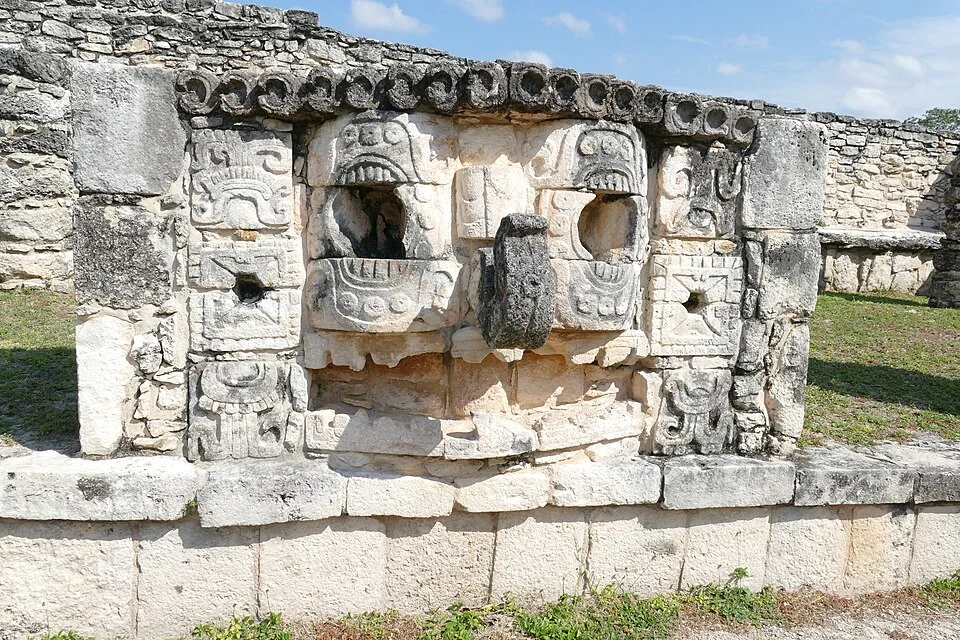
Cháak, often written Chaac, is associated with rain, lightning, and the waters necessary for cultivation. Ancient representations include distinctive facial features and objects connected with his power. An incense-burner image from Mayapán illustrates the deity's importance and the range of associations carried by its colours and imagery. INAH, representation of Chaac.
Rain powers may be differentiated by direction or treated in plural forms. This is more complex than the idea of one god pouring rain everywhere in the same way. In a landscape where rainfall and access to water are crucial, divine relationships concern the practical possibility of growing food.
Contemporary rain ceremonies, commonly called ch'a' cháak, express these concerns through offerings and specialist prayer. Their details depend on the community and occasion.
Itzamná and Sacred Knowledge
Itzamná is a major divine figure in colonial accounts of Yucatecan religion, associated with knowledge and the ordering of human life. Identifying him with particular figures in earlier art requires interpretation rather than simple equivalence between a later name and every ancient image.
The Maya religious world contains creator figures, celestial powers, ancestors, and beings associated with places and activities. These relationships do not necessarily form a single family tree comparable to a modern handbook's pantheon chart.
Goddesses and Pilgrimage
Ix Chel is associated in historical sources with healing, childbirth, and a major pilgrimage tradition connected with Cozumel. Modern accounts often combine her with several ancient female figures and assign all of them identical lunar attributes. The identification of specific images remains a scholarly problem.
Coastal routes and departure points reveal that pilgrimage was also a movement of people through a maritime landscape. Sacred travel linked shrines, settlements, and exchange networks. INAH, coastal Maya archaeological sites.
Kukulcán and the Feathered Serpent
Kukulcán, the Feathered Serpent, is prominent in the religious and political imagery of northern Yucatán. Chichén Itzá's architecture places serpent forms within monumental settings associated with public authority and ceremony.
Connections with feathered-serpent traditions elsewhere in Mesoamerica show sustained exchange. They do not require every story about the central Mexican Quetzalcoatl to be retold as a Yucatec narrative. INAH, serpent imagery at Chichén Itzá.
Maize and Reciprocal Obligations
Maize is fundamental to food, labour, and religious life. Its cultivation connects households with soil, rainfall, seasonal time, and inherited knowledge.
The sak ha' ceremony, named for a preparation translated as “white water,” is performed at significant stages of maize cultivation. It acknowledges the powers involved in agricultural wellbeing and gives farming a ceremonial dimension. National Museum of the American Indian, corn and calendar traditions.
The Popol Vuh is an important K'iche' Maya text, not a Yucatec scripture. Its maize-origin narrative and Hero Twins should not be presented as if they exhaust every Maya community's accounts of human origins and sacred heroes.
Aluxes and the Inhabited Landscape
Aluxes are small, powerful beings associated with fields, woodland, and particular places in Yucatec narratives. They can protect or disturb, depending on the relationship and the telling. Treating them merely as decorative “Maya elves” strips away their connections with land and responsibility.
Caves and cenotes likewise possess meanings extending beyond their usefulness as physical resources. Ritual attention can concern the beings and histories associated with a place. Contemporary discussion of cenote protection connects these relationships with the defence of territory and water. INAH Yucatán, ritual and cenote protection.
Ancestors and Christian Traditions
Colonization brought forced religious change, destruction of texts, and new institutions. Maya communities continued to interpret saints, ceremonies, and sacred places through local histories and relationships.
Hanal Pixán, the nourishment or food of the souls, maintains relations with the dead through household and community observance. Its offerings connect remembrance with agricultural cycles and kinship. INAH, traditions of the dead.
Christian commitment and participation in Maya ceremonies can coexist in different ways. Individual households and ritual specialists should not be assumed to hold identical explanations for every practice.