Tungusic names a language family, not a single culture or religion. Its speakers include Evenki, Even, Nanai, Udege, Manchu, and other peoples across Siberia and northeastern Asia. Hunting communities, fishing societies, pastoral groups, and an imperial court developed different religious institutions. Shared terminology and recurring themes do not establish a universal Tungusic pantheon.

An Inhabited World
Many recorded traditions describe relationships with beings connected to animals, places, ancestors, and the dead. Human wellbeing depends partly on conduct within this wider community. A hunting ground or river can possess relationships and obligations that are invisible to an outsider.
Evenki concepts translated as “spirit” do not always correspond neatly to Western distinctions between a ghost, god, soul, and object. Ethnographic research on buhadyl examines their associations with old things and deceased people, showing how religious meaning persists within historical change. Nikolai Ssorin-Chaikov, Evenki shamanistic practices.
Such traditions are not adequately described as a belief that every natural object contains an identical kind of soul. Relationships differ according to the being, place, and people involved.
Shamans and Their Helpers
The international word “shaman” entered European usage through Tungusic linguistic contexts. Its subsequent application to societies worldwide should not obscure the particular institutions from which it was borrowed.
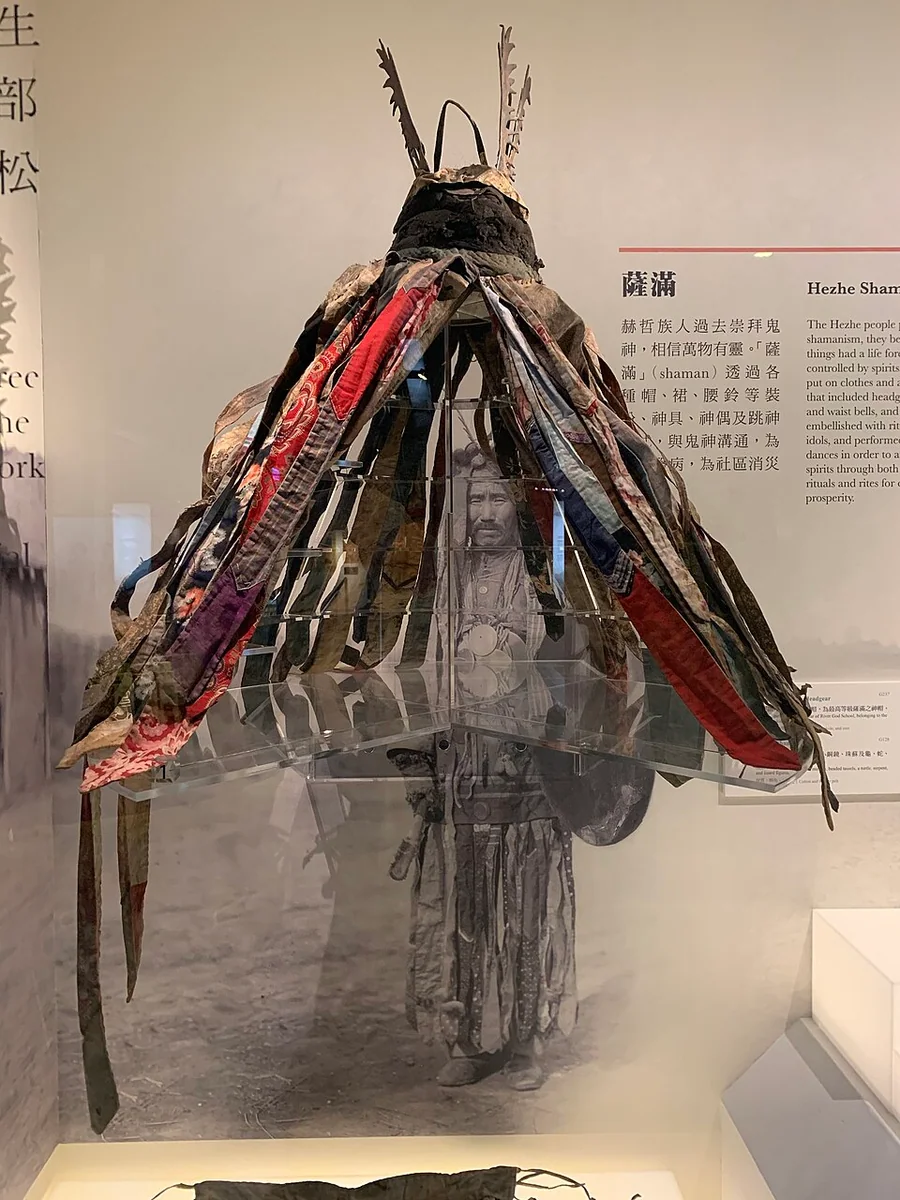
A shaman may work through inherited or acquired relationships with helping spirits. Healing, locating a lost soul, addressing misfortune, or assisting the dead can require different capacities. Drumming, singing, costume, and movement make these relationships perceptible to participants.
The instruments are not interchangeable props. Their forms and uses can identify a community, a ritual task, or a stage in a specialist's career. Museum collections preserve valuable evidence, but reconstructed displays can also combine objects in ways that no historical practitioner would recognize. Review of the National Museum of Denmark's Siberian and Mongolian shaman collections.
Hunting, Animals, and Reciprocity
Accounts from hunting communities describe game as more than an unrestricted resource. Hunters may address animal powers, observe rules for handling remains, and avoid boasting or waste. Success can depend on maintaining relationships with beings understood to govern animal availability.
Bears are especially significant in several northern traditions. Their treatment can involve respect, guarded language, and ceremonies following a kill. The details differ between Tungusic neighbours and other peoples of the region; a bear ceremony recorded among one community should not be copied into every Tungusic account.
Fire and the household also receive ritual attention. Domestic acts may sustain relations with unseen powers even when no specialist conducts a large ceremony.
Nanai Healing and the Dead
Nanai traditions of the lower Amur include elaborate distinctions among ritual tasks and the capacities of specialists. Healing and the eventual transfer of a deceased person's soul are not necessarily undertaken by the same practitioner or at the same stage.
Songs and material supports for spirits form part of these relationships. Ethnographic collections include separate studies of Nanai healing songs and amulets, alongside Evenki instruments; the distinctions themselves caution against a generic account of “Siberian shamanism.” Smithsonian Libraries, studies by Vilmos Diószegi.
Manchu Ancestors and Court Ritual
Manchu practices include household and clan rites addressing ancestors and divine powers called enduri. Heaven has a prominent place in religious language. Ritual at the Qing court developed within a political institution that also patronized Buddhist and other ceremonies.
Court regulation and written manuals shaped some practices, while family traditions retained their own histories. It would be misleading to reconstruct the religion of all forest-dwelling Tungusic peoples from imperial Manchu ceremonies, or to treat the court's rites as an unchanged prehistoric survival.
Historical Encounters
Tungusic communities have encountered Orthodox Christianity, Buddhism, Chinese religious traditions, and state campaigns against religion. Their responses include conversion, adaptation, concealment, and revival. These processes can leave multiple religious identities within the same extended community.
Comparative research has also depended on uneven access to different populations. A National Museum of Japanese History study explicitly notes the limited material available for some Manchu and Evenki groups, illustrating why gaps in documentation should remain visible. National Museum of Japanese History, Tungusic culture study.