Thai religious traditions combine Theravada Buddhism, Brahmanical court ceremonies, local spirit practices, and influences from neighbouring peoples. Thailand also contains substantial Muslim, Christian, Chinese religious, and other communities. Even within Buddhist populations, northern, northeastern, central, and southern traditions differ.
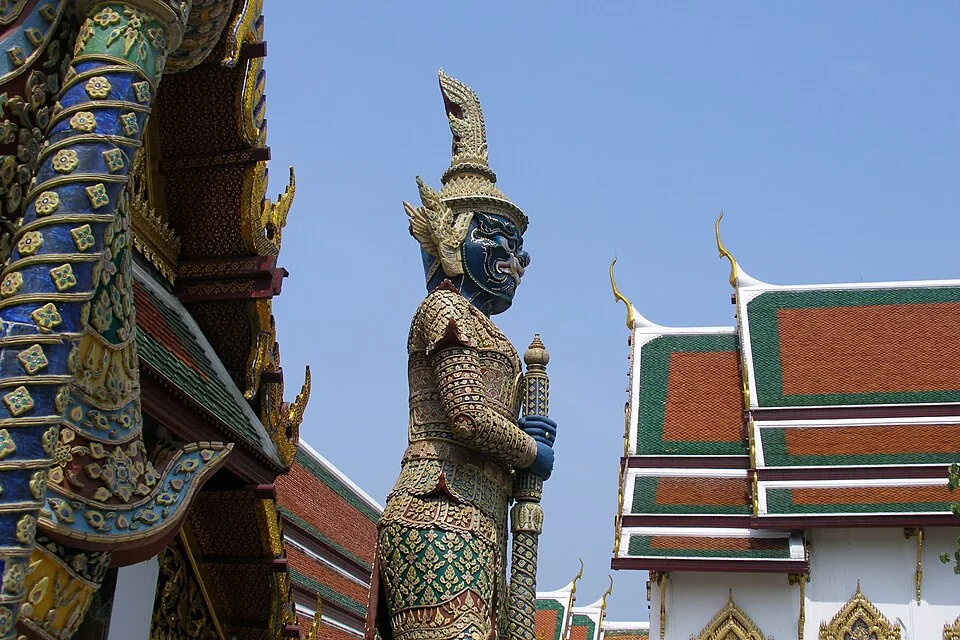

Karma, Rebirth, and the Buddhist Cosmos
Buddhist teaching places human life within repeated birth and death conditioned by actions and intentions. Gods inhabit fortunate realms but remain subject to impermanence. The Buddha's awakening therefore concerns a freedom beyond even heavenly existence.
Thai cosmological literature describes heavens, human worlds, animal existence, hungry ghosts, and hells. These realms provide settings for moral instruction rather than a simple division into permanently saved and condemned souls. Merit may be cultivated through generosity, ethical conduct, and religious practice.
The monk Phra Malai travels to hells and heavens in a widely represented narrative tradition. Encounters with suffering beings encourage offerings and dedication of merit, while his meeting with the future Buddha Metteyya connects present conduct with future hope. Thai manuscripts often place these stories alongside accounts of the Buddha's previous lives. British Library, Central Thai manuscript collection.
Devas and Royal Powers
Phra In, corresponding to Indra or Sakka, appears as a heavenly ruler and protector of religious virtue. Phra Phrom, associated with Brahma, receives offerings at prominent shrines. Their popularity does not make them Buddhist creators of the universe.
Brahmanical specialists also conduct ceremonies involving divine powers and royal prosperity. Such rites have their own histories alongside monastic Buddhism. A person can support monks and honour a protective deity without treating those activities as identical forms of practice.
The earth goddess Phra Mae Thorani is familiar in depictions of the Buddha's victory over Mara. She wrings water from her hair, overwhelming the hostile forces. The water testifies to the Buddha's accumulated merit, connecting a dramatic miracle with the moral significance of earlier generosity.
Nagas and Garuda
Nagas are powerful serpentine beings associated with water, subterranean domains, wealth, and protection. The naga Mucalinda shelters the meditating Buddha during a storm. Serpent balustrades and temple guardians bring these associations into the built environment.
Along the Mekong, naga narratives also explain places and relationships between human settlements and aquatic powers. Their local identities should be distinguished from the wider Buddhist category. Research on Thai naga belief traces the interaction of scriptural narratives, local traditions, and contemporary ceremonies. Nakhon Sawan Buddhist College, study of naga belief.
Garuda, called khrut in Thai, is a powerful birdlike being associated with royal authority. His antagonism with nagas belongs to a wider South and Southeast Asian narrative world. The prestige of naga imagery likewise extends to royal objects. Smithsonian, Thai naga ring.
The Ramakien
The Ramakien adapts the story of Rama into a Thai literary and performance tradition. Phra Ram, his wife Nang Sida, the demon king Thotsakan, and the monkey warrior Hanuman are its central figures. Sida's abduction sets in motion a struggle involving loyalty, kingship, kinship, and the abuse of power.
Hanuman is a resourceful fighter whose intelligence and exuberance receive particular emphasis in Thai retellings. The adversaries are not an undifferentiated group: royal demon characters have relationships, ambitions, and obligations. Masked khon performance and temple murals preserve particular versions of these stories.
Spirits, Rice, and Personal Wellbeing
Phi is a broad term covering different kinds of spirits. Some protect places or lineages; others cause illness or fear. Spirit houses provide a location for offerings to the powers associated with a site. These beings should not all be equated with ghosts of dead humans.
Mae Phosop, the Rice Mother, personifies the life-sustaining value of rice. Agricultural rites attend to rice as something requiring respect, not merely as a commodity. Ideas about khwan, often translated as vital essence, also inform ceremonies intended to restore wellbeing after vulnerability or transition.
Offerings made from banana leaves and flowers are prominent in bai si ceremonies across related mainland traditions. Their forms and purposes depend on local practice. Smithsonian Folklife Festival, Mekong cultural traditions.
Ghost Narratives
Thai ghost stories examine attachment, improper death, danger, and the protection offered by religious specialists. Mae Nak, the woman whose love persists after death in childbirth, is especially influential in storytelling and popular media. Versions differ in how her husband discovers her condition and how her attachment is resolved.
Krasue, portrayed with a detached head and trailing organs, and pret, hungry ghosts connected with harmful conduct, belong to different narrative categories. Their disturbing bodies give visible form to particular fears; they do not constitute one standardized class of evil deity.