Syriac is a literary form of Aramaic and a major language of Christian worship and thought. “Syriac” does not name one ancient pagan pantheon or a single modern ethnicity. Syriac heritage is shared by communities with different names, churches, and histories across the Middle East, India, and the diaspora.
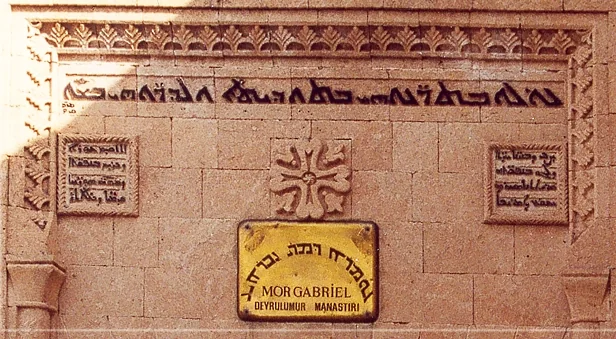

East Syriac and West Syriac traditions differ in liturgy and historical theology. The Church of the East, Syriac Orthodox, Maronite, Chaldean Catholic, Syriac Catholic, and several Indian churches should not be treated as one denomination. Syriaca.org, scholarly reference on the Church of the East.
God, Christ, and Salvation
Syriac Christianity affirms one God and the Christian teachings of the Trinity, incarnation, death and resurrection of Christ, and hope of resurrection for humanity. Saints and angels are not independent creator gods.
Historical disagreements about how to express Christ's divinity and humanity contributed to divisions between churches. Polemical labels can misrepresent the positions of the communities to which they are applied. A general article should therefore distinguish shared Christian commitments from the formulations of a particular church.
Ephrem and Symbolic Theology
Ephrem the Syrian, a fourth-century teacher and poet, expressed theology through hymns rich in biblical symbolism. Light, clothing, healing, paradise, and the relationships between visible and hidden realities allow poetry to explore meanings that a simple definition cannot exhaust.
Biblical events illuminate one another: a tree, water, a womb, or a garment can connect creation, baptism, incarnation, and salvation. Such symbolism is not a separate mythological pantheon. It is a way of reading scripture and worshipping within a Christian framework.
Susan Ashbrook Harvey's research examines how Ephrem's hymns and Jacob of Serugh's homilies shaped ethical conduct through participation in liturgy. Their poetry addressed congregations, not only solitary readers. “Liturgy and Ethics in Ancient Syriac Christianity”.
Jacob of Serugh and Sacred Narrative
Jacob of Serugh developed extended verse homilies that dramatize biblical events and explore the responses of their participants. Dialogue and imaginative elaboration help listeners enter a scriptural scene and consider its implications.
The Syriac Orthodox Patriarchate honours him as a major teacher and places his commemoration within prayer for the living, the dead, and the wider church. This contemporary statement is evidence for a particular church's reception of his legacy rather than a claim that every Syriac community uses identical commemorations. Patriarchal commemoration of Jacob of Serugh.
Mary, Angels, and Saints
Mary occupies a prominent place in hymnody and devotion as the mother of Christ. Her role is interpreted through biblical images and the church's teaching about the incarnation. Honour and requests for intercession do not make her a second creator alongside God.
Angels participate in biblical and liturgical accounts as messengers and worshippers. Seraphim and cherubim provide imagery for heavenly praise, while named angels such as Gabriel and Michael occur in scripture and devotional tradition.
Martyrs, ascetics, and teachers are remembered through saints' lives and feast days. These texts can combine historical memory with miracles, moral instruction, and the purposes of a local community. A miraculous episode should be presented as a sacred account rather than independently verified history.
Liturgy and the Sacramental World
The Eucharistic liturgy joins scripture, prayer, thanksgiving, remembrance, and communion. Incense, gestures, chant, and sacred language engage the senses within an ordered service. Different Syriac churches use distinct rites and textual traditions.
The anaphora attributed to Jacob of Serugh includes prayers for church leaders, the congregation, the departed, and the final hope of salvation. Its language brings the earthly assembly into relation with heavenly worship. Syriac Orthodox liturgical text.
Fasting, Pilgrimage, and Continuing Tradition
Fasts, feast days, baptism, marriage, funerals, and pilgrimage organize religious life beyond a single Sunday service. Monasteries preserve manuscripts and learning while also serving as places of prayer and communal memory.
Migration and persecution have dispersed Syriac communities, producing new settings for language education and worship. Classical Syriac remains important even where everyday speech is another language. Preserving a hymn or manuscript consequently involves both religious continuity and decisions about how a new generation will understand it.