Sumerian religious literature comes from southern Mesopotamia, in present-day Iraq. Its language differs from Akkadian, although Sumerian and Akkadian traditions influenced one another for many centuries. Many surviving copies of Sumerian compositions were written in schools after Sumerian had ceased to be the everyday language of much of the region.

The texts preserve different local and historical traditions. They do not constitute one perfectly consistent scripture or genealogy. The Epic of Gilgamesh in its best-known extended form is Akkadian; separate Sumerian poems about Gilgamesh survive and should be distinguished from it.
An, Enlil, and Divine Government
An is associated with heaven and high divine authority. Enlil, whose principal cult centre was Nippur, is a major source of kingship, destinies, and the ordering of the inhabited world. His authority concerns the relations among gods and the welfare of cities as well as a natural element such as wind.
Ninlil is closely associated with Enlil. Divine genealogies can change between compositions, and a deity may be called a child of another in a particular hymn without every other text agreeing. The modern scholarly project Ancient Mesopotamian Gods and Goddesses documents this variation rather than forcing all sources into one family tree. Enlil/Ellil, ORACC.
Enki and the Making of Human Life
Enki is associated with wisdom, craft, fresh water, and the deep-water domain called the abzu. His principal city is Eridu. He often finds a solution where the direct exercise of divine authority has created a difficulty.
In Enki and Ninmah, the gods' labour provides the setting for the creation of humans. Namma and birth goddesses participate in bringing people into existence. A later contest between Enki and Ninmah concerns unusual human bodies and their places in society. The text explores the assignment of function and livelihood rather than a simple division between valuable and worthless lives. Oxford ETCSL, Enki and Ninmah.
Maternal deities appear under several names and titles, including Ninhursaga, Ninmah, and Nintur. Their identities overlap in complex ways; the names should not always be counted as wholly independent goddesses or collapsed into one without reference to a particular text.
Inana: Desire, Conflict, and Authority
Inana, later closely identified with Akkadian Ishtar, is associated with sexual attraction, warfare, and transformations of status. Uruk is a major centre of her worship. Her personality is forceful and mobile: she seeks powers, crosses boundaries, and confronts limits.
In Inana and Enki, she acquires the me, divine powers or ordinances that make ordered cultural life possible. Their scope includes institutions, skills, offices, and conditions of existence. They are not simply a set of written commandments. Her transport of them to Uruk joins a goddess's initiative with the prestige of a city. Oxford ETCSL, Inana and Enki.
The Descent to the Netherworld
Inana descends to the realm ruled by Ereshkigal. At successive gates she loses the insignia of her power, is judged, and dies. Her minister Ninshubur follows instructions to seek help. Enki creates beings who respond to Ereshkigal's suffering and obtain the means to restore Inana.
Return carries a condition: another must take her place. Dumuzi, found in a state that does not express the expected mourning, becomes implicated in that exchange. The story makes even a formidable goddess subject to the conditions of the netherworld. It is not simply a story of a heroic rescue without consequences. Oxford ETCSL, Inana's Descent.
Dumuzi, Nanna, Utu, and Other Powers
Dumuzi is a shepherd figure and Inana's consort in important traditions. Lamentation over his loss connects divine narrative with mourning. His sister Geshtinana participates in stories concerning his fate.
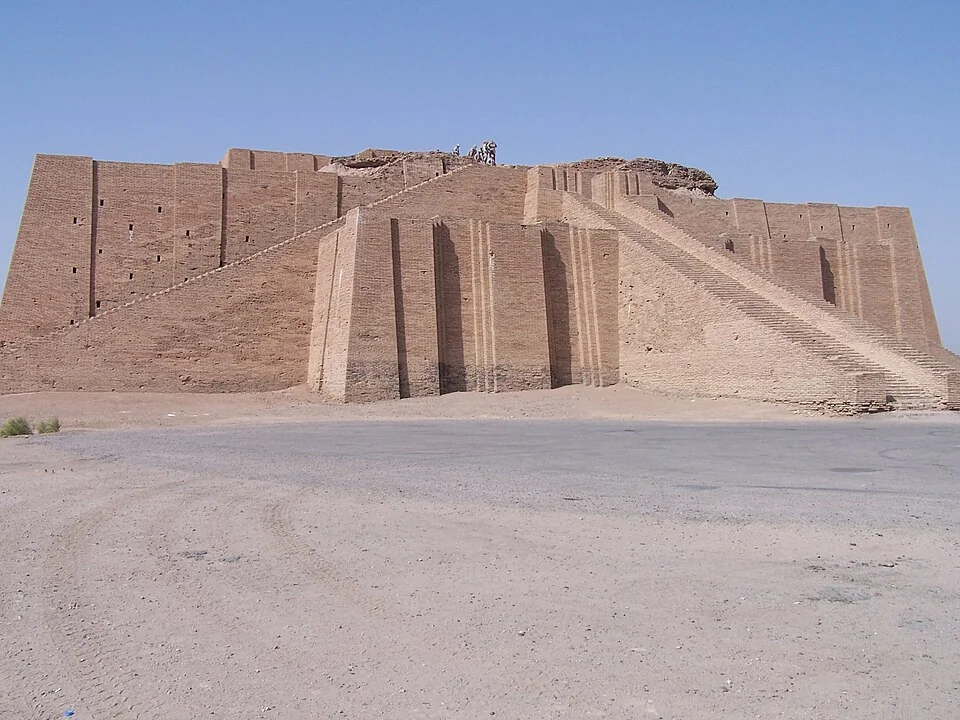
Nanna, also called Suen, is the moon god, with a major sanctuary at Ur. Ningal is associated with him. Utu, the sun god, is a power of justice whose daily passage makes hidden human affairs visible. Inana and Utu are siblings in many familiar accounts, though the larger genealogical system remains variable.
Ninurta joins warrior power with the ordering of land and agriculture. Nanshe concerns matters including justice, divination, and the protection of vulnerable people. Nisaba is associated with grain and scribal knowledge. Gods of healing, craft, canals, and particular cities further complicate any short list of “the Sumerian gods.”
Gilgamesh, Enkidu, and Huwawa
Sumerian poems place Gilgamesh, king of Uruk, in adventures that later entered the Akkadian epic tradition. In Gilgamesh and Huwawa, Gilgamesh and Enkidu enter a distant cedar region and confront its terrifying guardian.
Huwawa is more than an animal obstacle. His power belongs to a place and has divine connections, while the heroes' pursuit of renown raises questions about the consequences of killing him. The surviving versions differ, making their comparison more informative than combining every detail into one definitive episode. Oxford ETCSL, Gilgamesh and Huwawa, version A.
Temples, Images, and Ritual Care
A temple was the house of a deity and an institution with personnel, land, labour, and economic responsibilities. Sacred images were clothed, fed through offerings, and attended. These acts maintained a relationship between the city and its divine patron rather than treating a statue as ordinary furniture.
Kings represented themselves as builders and servants of divine institutions. Hymns praised deities and rulers, while lamentations addressed devastation and the departure of divine favour. The same religious world could explain prosperity through a god's presence and catastrophe through the disruption of that relationship.
Death and the Surviving Corpus
The dead required remembrance and care, and neglected relationships could have consequences for the living. Netherworld narratives describe a domain with its own rulers and conditions, not a simple paradise awarded to morally good people.
Flood stories and creation accounts survive in multiple Mesopotamian languages and periods. The Sumerian corpus should be read alongside, but not substituted for, Akkadian and Babylonian literature. Oxford's catalogue identifies individual compositions and versions for readers who wish to compare them. ETCSL mythological catalogue.