The Purépecha people are Indigenous to Michoacán in western Mexico. Their language and history are distinct from those of the neighbouring Nahua peoples. The pre-Hispanic state, often called Tarascan in older scholarship, resisted Mexica expansion and developed its own religious and political institutions.
.jpg)
A major written source is the sixteenth-century Relación de Michoacán, compiled under colonial conditions from Indigenous testimony. Its surviving narrative emphasizes ruling lineages and their divine patron; it cannot be treated as an exhaustive record of every community's beliefs.
Curicaueri and Sacred Fire
Curicaueri was the patron of the ruling Uacúsecha lineage and a power associated with fire, war, and solar imagery. Maintaining his worship involved supplying fuel and tending sacred fires. Political expansion and service to the deity were closely connected.
Obsidian could embody his presence. Archaeological interpretation of a red obsidian ceremonial knife connects the material with divine power, warfare, sacrifice, and directional symbolism. Curicaueri's presence was consequently not restricted to a human-shaped image. Arqueología Mexicana, ceremonial obsidian.
Cuerauaperi and Xaratanga
Cuerauaperi is a maternal creative power associated with the earth and the generation of life. Her relationships with rain and other divine beings locate fertility within a larger cosmic order. Spellings such as Cuerávaperi reflect different attempts to represent the name.
Xaratanga has associations with fertility, the moon, and particular settlements around Lake Pátzcuaro. According to the Relación, her command was involved in the re-establishment of Tzintzuntzan under Tangánxoan I. The episode gives a goddess an active part in the founding and legitimacy of a political centre. INAH, Tzintzuntzan.
The two goddesses should not be reduced to generic counterparts of Mexica deities. Their relationships with local history and places are crucial to understanding their roles. An INAH study of Purépecha religious history discusses them alongside Curicaueri and the translation of Indigenous concepts into colonial religious language. INAH, Eráxamakua.
Metal, Colour, and the Divine Body
Purépecha metalworking was both technically accomplished and religiously meaningful. A passage in the Relación interprets yellow gold and white silver through the sun and moon. Such explanations place materials within divine bodily processes rather than treating them only as valuable commodities.
The daily passage of solar power and the associations of earth and moon linked metal, colour, and direction. These ideas complicate a modern separation between technology and religion: the physical properties of a substance could be part of its sacred identity. Arqueología Mexicana, gods and metalworking.
Tariacuri and the Sacred History of Rule
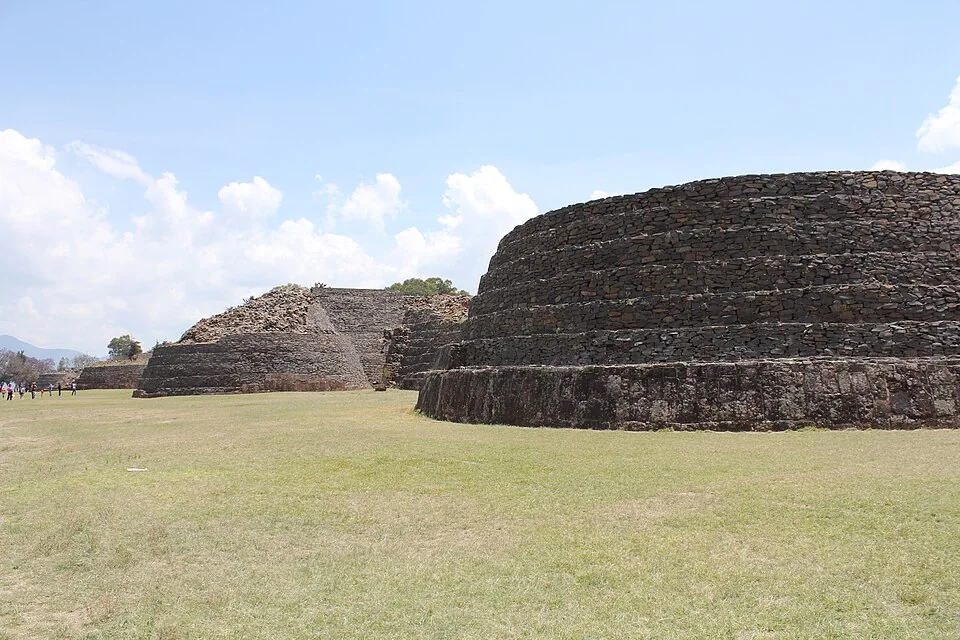
Tariacuri is a central ruler in the historical narrative. His instruction of younger relatives connects political succession with the distribution of Curicaueri's sacred presence. The establishment of centres at Pátzcuaro, Ihuatzio, and Tzintzuntzan is narrated through both strategy and divine authorization.
These accounts should be read as sacred political history. They preserve remembered rulers and places while explaining why a particular lineage possessed authority. A ruler's achievements are not equivalent to the adventures of a creator god, even when both appear in the same religious narrative. Arqueología Mexicana, the Tarascans.
Offerings, Death, and Ritual Specialists
Priests and other officials tended fires, supervised offerings, and recited histories. Ritual labour connected the population with royal institutions. Human sacrifice is described in colonial evidence, particularly in contexts of warfare and elite funerals, but its circumstances should be distinguished from assumptions imported from Mexica practice.
Burial and funerary treatment reflected status and ideas about the continuation of life after death. The archaeological record and written accounts provide different kinds of evidence; neither authorizes a universal procedure for every Purépecha settlement.
Colonial and Continuing Traditions
Catholic evangelization transformed public worship and introduced new sacred calendars and institutions. Contemporary Purépecha communities maintain varied relationships with saints, ancestors, local landscapes, and inherited customs.
The well-known commemorations of the dead around Lake Pátzcuaro have a history shaped by Indigenous and Catholic practices as well as modern public representation. They should not be described as a completely unchanged survival of the state religion recorded in the Relación.