The Ossetians are an Iranian-speaking people of the central Caucasus. Their religious heritage combines local sacred traditions, the Nart epic cycle, and long engagement with Christianity and Islam. The Narts also appear in the traditions of neighbouring Caucasian peoples, but their names, relationships, and adventures differ among languages and communities.

Divine Authority and Uastyrdzhi
The creator is invoked as Khuytsau, with forms and spellings varying by dialect and transcription. Ritual invocations distinguish this overarching divine authority from sacred figures more directly involved in daily affairs.
Uastyrdzhi, whose name is historically connected with Saint George, protects travellers, men, and the keeping of obligations. He can appear as a formidable rider and occupies a prominent place in communal prayer. At ceremonial feasts, the first invocation is directed to the creator and the next commonly to Uastyrdzhi. His relationship to Saint George does not exhaust his local meaning; scholarship also compares aspects of his role with older Iranian traditions, without proving a simple unchanged identity. Encyclopaedia Iranica, Uastyrdzhi.
Other Sacred Powers
Uatsilla, associated with Saint Elijah, concerns thunder and agricultural well-being. Tutyr is connected with wolves, while Fælværa protects livestock. Æfsati is associated with wild animals and hunting. Donbettyr rules a water realm and appears in epic genealogies. Kurdalægon, the heavenly smith, makes or transforms bodies and equipment through his craft.
These figures do not all function in the same way. A being prominent in an epic may have a different place in local worship, and historical Christian names can coexist with functions that do not correspond closely to church doctrine.
Satana and Uryzmag
Satana, also written Shatana or Satanæ, is a central woman of the Nart household. Intelligence, foresight, hospitality, and the management of crises define her importance. Her name should not be confused with the Christian Satan.
Satana and Uryzmag are a sibling couple in Ossetian epic tradition. Their unusual union belongs to the special conditions of the heroic world rather than an ordinary prescription for marriage. Their mother Dzerassæ comes from the water realm of Donbettyr, linking the Narts to nonhuman ancestry. Stories establish their authority through perseverance and wisdom as well as birth. Encyclopaedia Iranica, Satana and Uryzmag.
Batraz: The Steel Hero
Batraz is born through an extraordinary transfer of pregnancy. After a dispute with his father Khamyts, his mother places the unborn child into a swelling on the father's back. Batraz emerges with a steel body, and the heavenly forge makes him almost invulnerable.
His martial power is extreme, but not without limits. A vulnerable interior survives the tempering, and his eventual confrontation with heavenly powers exposes the failure of invincibility. The hero's body joins human birth to metalworking: strength is made and hardened, yet a transformed body remains subject to destruction. Encyclopaedia Iranica, Batradz.
Soslan and Syrdon
Soslan is another extraordinary warrior, associated with a miraculous origin and a process of hardening. Syrdon's intervention leaves Soslan's knees unprotected, giving enemies a means to kill him. His encounters combine courage with cunning, pride, and cruelty; he is not a uniformly virtuous hero.
Syrdon frequently undermines the Narts through intelligence and provocation. His place is that of an unsettling insider or marginal figure rather than a cosmic embodiment of evil. Stories involving his schemes expose weaknesses in a heroic society that prizes honour while practising deception. Encyclopaedia Iranica, Soslan.
Feasts, Honour, and Epic Society
Feasting is a setting in which status is displayed, obligations are tested, and stories become public knowledge. Hospitality requires material generosity and proper conduct. A person's reputation depends not only on battlefield achievement but also on how guests, relatives, and promises are treated.
The Narts repeatedly confront the danger of excessive pride. Their society's extraordinary capacities do not guarantee survival. Different accounts of their end ask whether prolonged life without honour is preferable to a shorter but memorable existence. These stories preserve debate about conduct, rather than a single moral rule mechanically illustrated by every hero.
Shrines and Continuing Observance
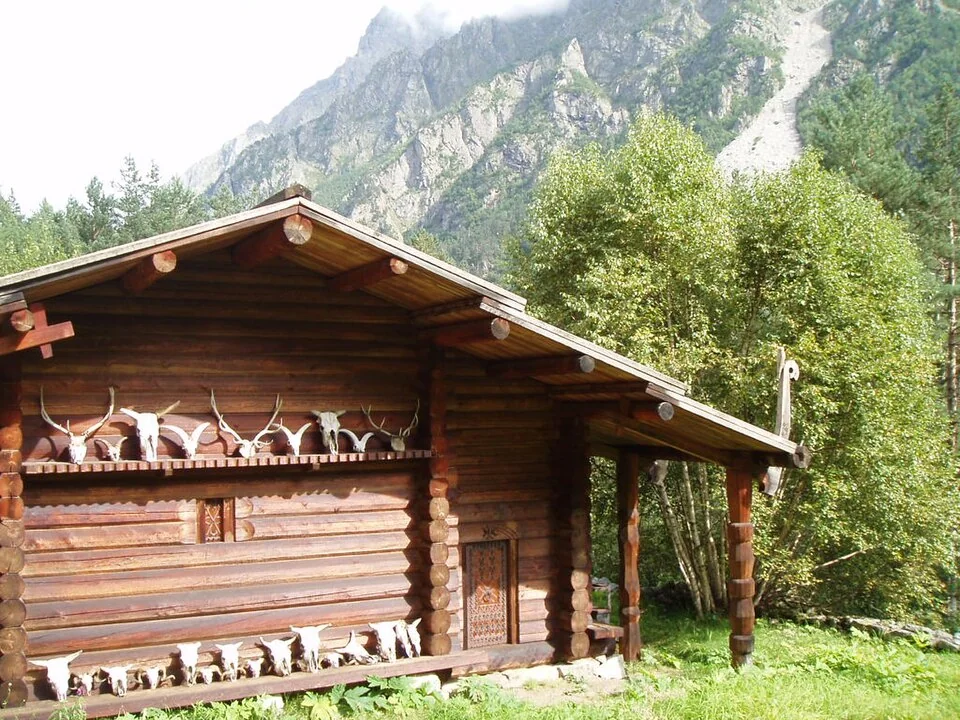
Sacred places, communal meals, offerings, and sequences of prayer remain important in Ossetian religious life. Participation and interpretation vary: some people understand these customs within Christianity, while others identify them with Indigenous religion. Terms used by contemporary revival movements should not be projected unchanged onto every earlier period.
Comparisons with Alan, Scythian, and Sarmatian traditions are historically relevant because of Iranian linguistic and cultural connections. They nevertheless require evidence for particular motifs; resemblance between two heroes does not establish that every detail survived continuously from antiquity.