The Oromo are a large and internally diverse people of Ethiopia, Kenya, and a global diaspora. Oromo religious life includes Islam, Christianity, and Waaqeffannaa, an Indigenous tradition centred on Waaqa. Religious affiliation does not exhaust cultural identity: people with different commitments may share language, kinship, ethical vocabulary, and participation in public celebrations.

Waaqa and the Order of Existence
Waaqa is the creator and sustaining divine power. Waaqeffannaa is not well described as a collection of competing nature gods. The visible sky, rain, fertility, truth, and the maintenance of a proper order are connected within religious thought, but Waaqa should not be equated simply with the material atmosphere.
Ayyaana is an important and context-dependent term for spiritual presence or agency. It is sometimes explained as the means through which divine power relates to particular beings and situations. The word can also have calendrical meanings; translating every occurrence as a separate “god” produces a misleading pantheon.
The ethical concept safuu concerns appropriate relationships and conduct. Religious life involves respecting the conditions under which humans, other beings, and the environment can flourish. An Oromo-authored account of Waaqeffannaa places these ideas alongside institutions, festivals, and inherited knowledge. “Oromo Indigenous Religion: Waaqeffannaa”.
Religious Specialists and Community Authority
Qaalluu institutions provide religious leadership in a number of Oromo traditions. Their responsibilities can include blessing, mediation, and the maintenance of sacred relationships. Religious authority should be distinguished from political office, even where the two interact.
The gadaa system organizes responsibilities through successive classes and stages of life. It encompasses political, legal, and ceremonial functions rather than constituting a separate pantheon or a single religious denomination. Its regional forms differ, and the relationship between gadaa and other institutions has changed over time. UNESCO, Oromo cultural institutions and Irreecha.
Irreecha: Thanksgiving and Seasonal Renewal
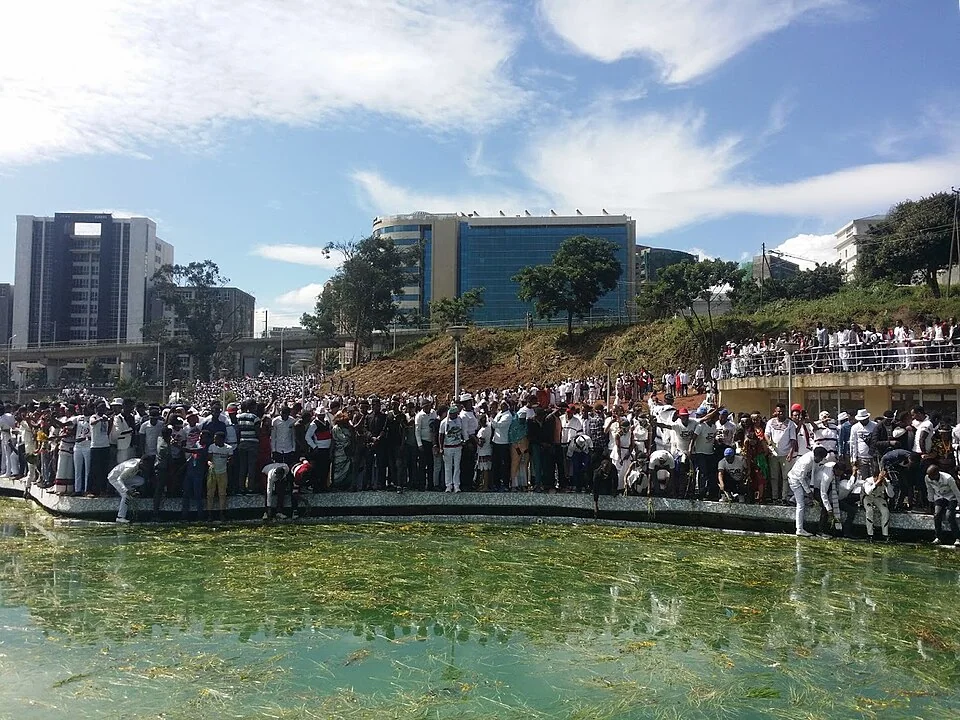
Irreecha expresses gratitude for life, rain, fertility, and the passage through difficult conditions. Participants gather at sacred landscapes, including water and elevated places, bringing green vegetation and flowers. Blessing, prayer, and song connect the renewal of the environment with the welfare of the community.
The public gathering at Hora Harsadi near Bishoftu is especially well known, but the observance is not confined to one site. Different seasonal and local forms exist. A practitioner account distinguishes celebrations associated with water from those associated with mountains and emphasizes peace and renewed relationships among participants. Waaqeffannaa, Irreecha festivals.
Ateetee and Women's Religious Work
Ateetee traditions foreground women's ritual authority. Depending on locality, the term is associated with fertility, spiritual relationships, and collective ceremonies conducted by women. It should not automatically be converted into the name of a universal Oromo goddess with a fixed biography.
Among Arsi Oromo women, sung ateetee rituals can address mistreatment and seek the restoration of justice. Collective performance gives women's grievances a public and religious force. The participants' actions are therefore more than songs performed for entertainment: they can insist that violated relationships be repaired. Research on Ateetee as sung dispute resolution.
Oral Tradition and Religious Difference
Blessings, proverbs, narratives, and ritual speech communicate ideas about generosity, truth, responsibility, and the consequences of disorder. Their significance often lies in the relationship between speaker and listener and in the circumstances of performance. Extracting a single story from this setting can obscure why it was told.
Oromo traditions have developed through contact with neighbouring peoples and through long histories of Islam and Christianity. A reference to Waaqa in everyday speech does not, by itself, identify the speaker's religious affiliation. Likewise, contemporary Indigenous religious organization and renewed public celebration involve active decisions about education, identity, and transmission rather than the unchanged repetition of a remote past.