The Nuu-chah-nulth peoples are distinct First Nations whose territories extend along the west coast of Vancouver Island. Their languages, territories, and family histories support related but locally specific traditions. The older label “Nootka” is common in museum catalogues but should not replace the names communities use for themselves.
_02black.jpg)
Religion is inseparable from responsibilities to relatives, territories, food sources, and inherited knowledge. The following account concerns publicly shared teachings. It does not claim to reproduce ceremonial knowledge belonging to particular families or rights holders.
Spiritual Relationships and N'ass
In testimony published by the Nuu-chah-nulth Tribal Council, Jan Mary Webster describes a connection with the Creator, or N'ass, running through marriage, governance, language, and respect for other beings. Spirituality is consequently not confined to an occasional ceremony: it gives meaning to one's place in a family and nation.
Grandparents have important responsibilities in transmitting these teachings. Songs, dances, and knowledge pass through relationships established by descent, marriage, and birth. Their significance includes who has the right and responsibility to carry them. Jan Mary Webster, Nuu-chah-nulth Tribal Council.
Thunderbird and the Powers of Whaling
Thunderbird is a powerful supernatural whaler. Its relationships with whales and lightning beings appear in narratives and in the imagery of hereditary privileges. A carving or curtain bearing these figures can identify a family's history and rights rather than merely illustrate a story known to everyone in the same form.
The lightning serpent is also connected with whaling power. Museum objects place Thunderbird, the serpent, and the whale within a visual vocabulary of extraordinary hunting ability. Such imagery links human whalers to powerful nonhuman counterparts. Seattle Art Museum, whalebone club; research on nonhuman whalers.
T'iitsk'in Paawats, Thunderbird's Nest, is a sacred place of the Uchucklesaht people. Accounts associated with the site connect it with Thunderbird and with the prayer, bathing, fasting, and preparation of whalers. This association makes a specific landscape part of religious history; it is not an invitation for visitors to imitate the practices. Thunderbird's Nest management plan.
Whaling as Religious and Social Work
A successful whale hunt demanded technical expertise and spiritual preparation. Hudson Webster's publicly shared account describes prayer before hunting and thanksgiving before a whale was distributed and eaten. The catch sustained a community, making the hunt a collective responsibility rather than an individual's achievement alone.
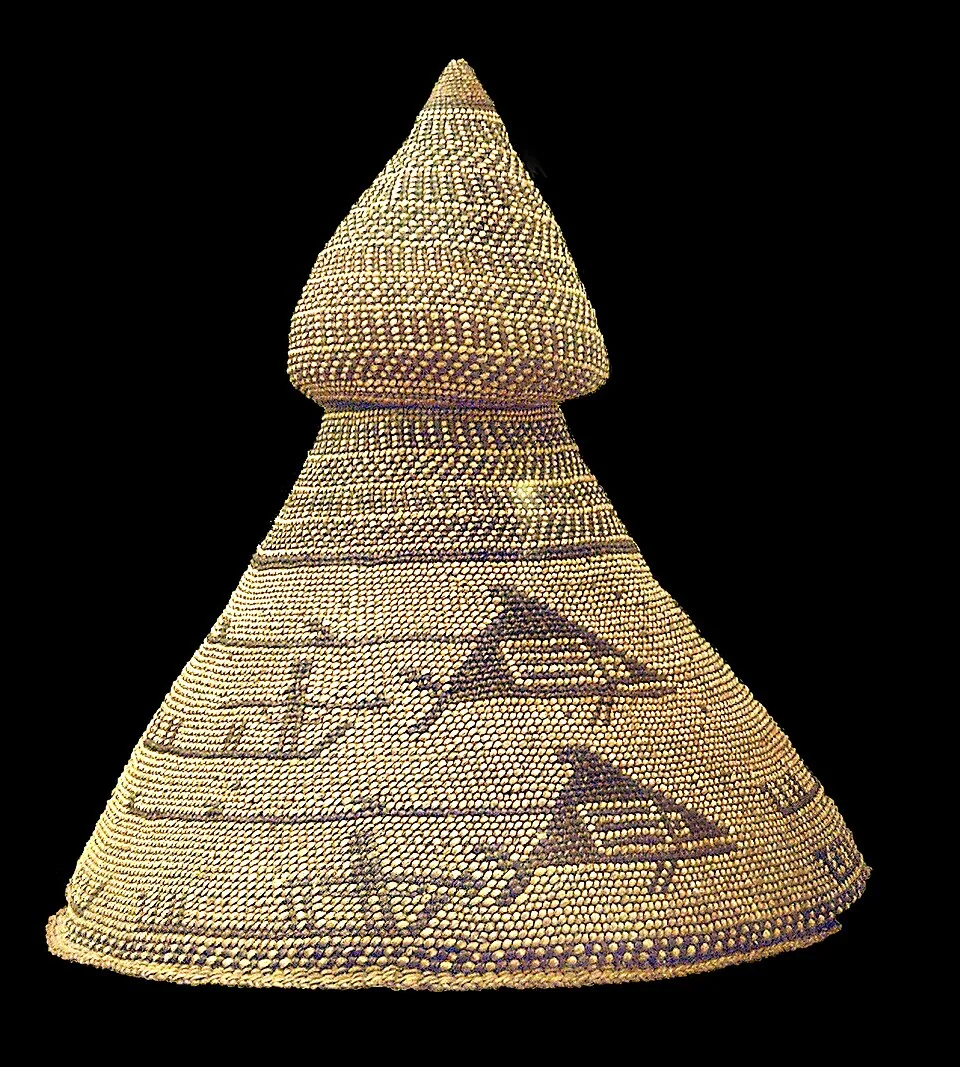
Whaling status could be expressed through names, regalia, ceremonial objects, and rights to display particular images. The American Museum of Natural History's Nuu-chah-nulth presentation, developed with community participation, explains these objects through the histories and voices of their owners. Hudson Webster; American Museum of Natural History.
Raven and the Dangers of Boasting
Raven appears in instructive stories as well as in larger supernatural narratives. Nora Underwood recalls her grandmother's story of Raven claiming that he could fish as successfully as Eagle. Raven wants to hold a potlatch, but his boasting exceeds his ability to provide enough food.
The story teaches through an animal's failure and through the gentle authority of the storyteller. Its point is not that Raven always has one moral character. Rather, this particular narrative concerns pride, responsibility, and the difference between claiming a capacity and fulfilling an obligation. Nora Underwood, Nuu-chah-nulth Tribal Council.
Food, Family, and Ceremonial Continuity
Amelia Thompson Campbell describes learning to prepare fish, whale, and seal, gather plants, and support others. Her account joins practical competence with restraint: taking from land and sea requires consideration for what will remain. Respect is expressed in how food is gathered and shared, not solely in statements about belief. Amelia Thompson Campbell.
Colonial restrictions, residential schools, and the removal of ceremonial belongings disrupted these systems of teaching. Public storytelling, language work, family instruction, and the recovery or reinterpretation of museum collections now provide different settings for transmission. The authority to share a teaching remains with its people and custodians; publication of one account does not make all related knowledge unrestricted.