The Baga people are an ethnic group inhabiting the coastal regions of Guinea, particularly in the areas of Boké and Kindia. Baga beliefs, mythology, and rituals center on the natural world and the spirits that inhabit it.

Deities
Traditionally the Baga practiced a form of animism that revered a pantheon of deities and spirits. Most Baga are now Muslim, though some continue traditional rituals. These deities have distinct personalities and stories, often associated with specific aspects of the natural world or human life. Among the primary deities are:
-
Kanu: The supreme god of the Baga pantheon, responsible for the creation of the world and humankind. Kanu is believed to be omnipotent and is typically not worshipped directly, as it is thought that he is too powerful and distant for human interaction.
-
A-Mantsho-ña-Tshol: The female counterpart of Kanu, often referred to as the "Mother of All Things." She is associated with fertility, agriculture, and the overall well-being of the Baga people.
-
Somtup: The deity of thunder and lightning, believed to be a powerful and fearsome figure. Somtup is often invoked during storms to protect the community from harm.
Mythology and Heroes
The Baga people's mythology is rich with stories of heroes and supernatural beings, which serve as moral lessons and convey their cultural values. Some prominent figures in Baga mythology include:
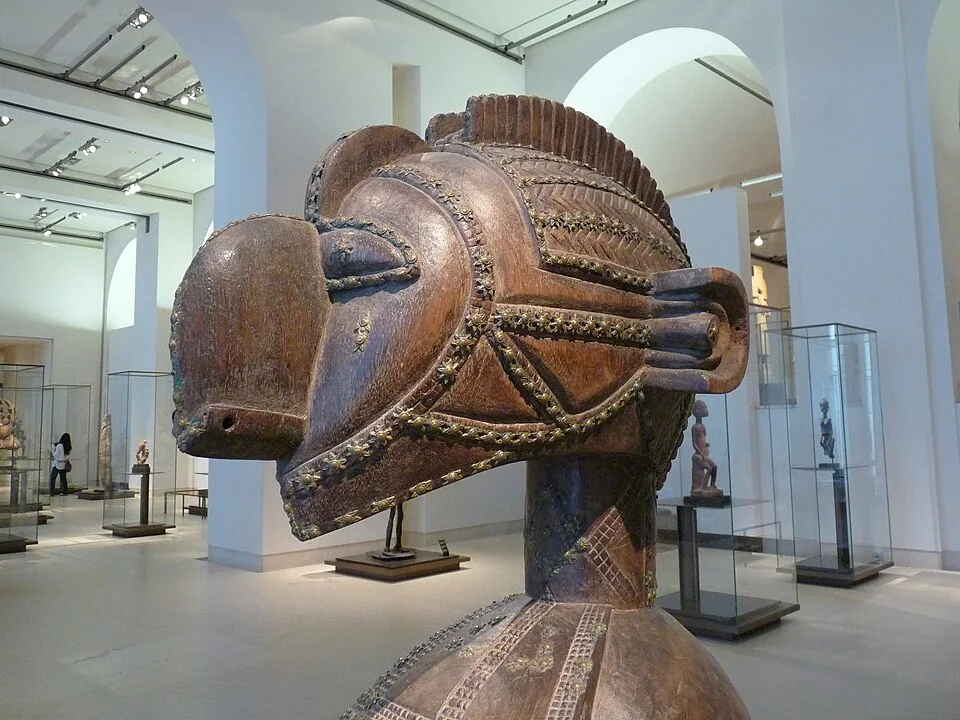
- The Nimba (D'mba): A very large shoulder mask, the largest known from West Africa, danced for fertility, planting and harvest and at weddings. Baga elders have said it does not represent a particular spirit or goddess but an idea of fertility and strength for women.
Rituals and Other Beliefs
-
Ancestral Worship: The Baga people believe that their ancestors play an active role in the spiritual world, protecting and guiding their descendants. As such, they hold rituals and ceremonies to honor and venerate their ancestors, seeking their blessings and wisdom.
-
Initiation Rites: Baga initiation rites mark the transition from childhood to adulthood. These rites involve a series of rituals and trials, with the aim of imparting important cultural knowledge and skills to the initiates. During these rites, masks represent the deities and mythological creatures.
-
The Dance of the Serpent: This Baga ritual involves the use of a large serpent mask, which is worn by a skilled dancer.